Young Sick Bacchus
Borghese Gallery, Rome, Italy
Caravaggio, 1593
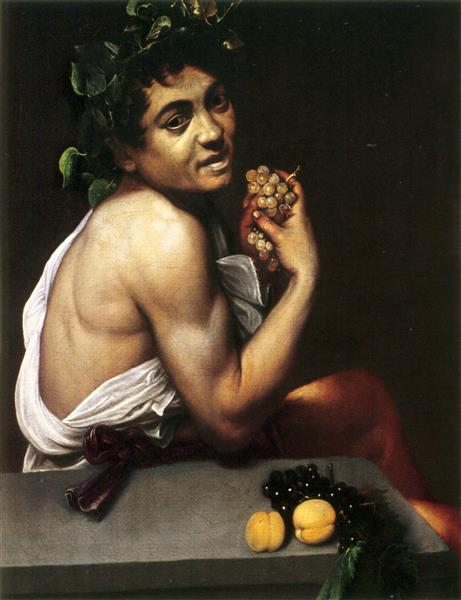
The image of a sick Bacchus, captured in oil on canvas, immediately arrests attention. This striking work is an early self-portrait by the Italian Baroque artist Michelangelo Merisi da Caravaggio, dated between 1593 and 1594. According to his first biographer, Giovanni Baglione, Caravaggio painted this cabinet piece using a mirror. This technique of direct self-observation brings a particular intensity to the figure presented, which is not merely a god but the artist himself in a state of illness. The decision to portray oneself as a deity, yet clearly unwell, provides a compelling visual paradox, a direct subversion of idealized forms characteristic of the Baroque movement. The artwork now resides in the Galleria Borghese in Rome. Its association with Tenebrism, a movement defining Caravaggio's style, implies a dramatic use of contrast, shaping the appearance of the figure with deep shadows and focused illumination. It makes one consider the artist's raw confrontation with his own image and vulnerability. What profound, perhaps unsettling, truth about the self did Caravaggio aim to reveal through this candid, reflected portrayal?
No thoughts yet. Be the first to share one.
TagsBaroqueTenebrismoilcanvasmythological painting
4.00 (1 rating)
oil, canvas · 1593
Medium
oil, canvas
Period
Baroque · Tenebrism
Held at
Borghese Gallery, Rome, Italy