David and Goliath
Museo del Prado, Madrid, Spain
Caravaggio, 1599
The chilling weight of victory hangs heavy in the air, captured on oil and canvas around 1599. As an Italian Baroque master, Caravaggio plunges us into the aftermath, presenting a scene so vivid it's also known as David with the Head of Goliath or David Victorious over Goliath. This is Tenebrism at its most potent; expect figures to dramatically emerge from deep, enveloping shadows, illuminated by a harsh, singular light source that heightens the psychological drama. We see David, the youthful victor, undoubtedly gripping the severed head of Goliath, the stark contrast between his youthful, living form and the lifeless, grotesque trophy. The very technique underscores the emotional intensity, a hallmark of the Baroque movement. There's no escaping the raw reality here, no gentle fade into the background. The composition, focused tightly on these two central figures, pulls you into the immediate, visceral moment. Now held in the Museo del Prado, Madrid, the artwork forces a lingering contemplation on the brutal cost of triumph, leaving a sense of unsettling quiet in its powerful, dark embrace.
No thoughts yet. Be the first to share one.
TagsBaroqueTenebrismoilcanvasreligious painting
5.00 (2 ratings)
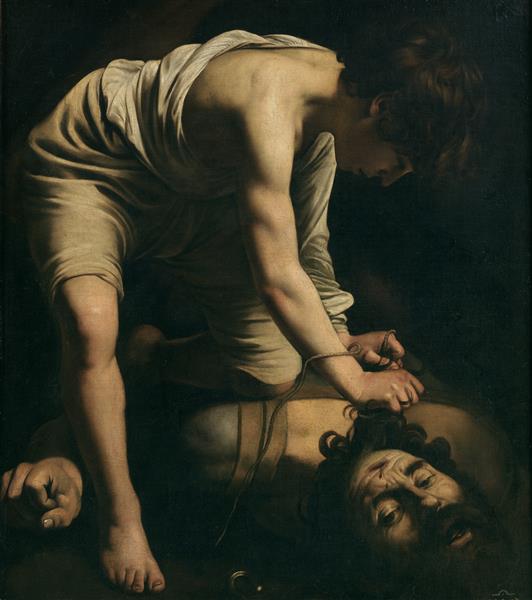
oil, canvas · 1599
Medium
oil, canvas
Period
Baroque · Tenebrism
Held at
Museo del Prado, Madrid, Spain