Ecce Homo
Palazzo Rosso, Genoa, ItalyPalazzo Bianco, Genoa, Italy
Caravaggio, 1605
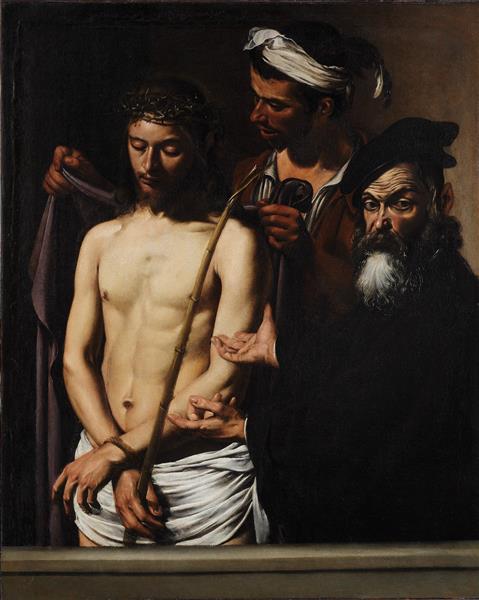
The scene is instantly unsettling: a figure presented, clearly scourged, bound, and crowned with thorns. It
s a moment of profound vulnerability, captured in 1605 by Caravaggio with an unflinching directness. The very title, "Ecce Homo" "behold the man" as spoken by Pontius Pilate in the Gospel of John, underscores the dramatic confrontation between the suffering figure and the "hostile crowd." Crafted with oil on canvas, the work almost certainly harnesses the hallmarks of Tenebrism, where dramatic contrasts of light and deep shadow would starkly illuminate the principal figures, pushing them forward from an unseen darkness. This Baroque technique would isolate the condemned, making his torment viscerally immediate. The choice of this precise moment the public display of a man about to be crucified resonates with a raw human spectacle, forcing viewers to confront the implications of that gaze. What does it mean to "behold the man" in such a state, and what is the nature of the crowd
s response, or our own?
No thoughts yet. Be the first to share one.
TagsBaroqueTenebrismoilcanvasreligious painting
4.50 (1 rating)
oil, canvas · 1605
Medium
oil, canvas
Period
Baroque · Tenebrism
Held at
Palazzo Rosso, Genoa, Italy