El amor victorioso
Gemäldegalerie, Berlin, Germany
Caravaggio, 1602
Caravaggio’s "El amor victorioso" immediately draws you in with its unidealized depiction of Cupid. No cherub-like innocence here; instead, the god of love is presented with a strikingly realistic form, complete with a crooked grin and a tousled head of hair that feels surprisingly human. This figure, painted in oil on canvas, asserts his dominance by literally standing upon the trampled symbols of human ambition: music, science, war, and government. It's a profound, almost defiant illustration of Virgil’s resonant line: “love conquers all; let us all yield to love!” The boldness of presenting Cupid in such an earthy, yet triumphant, manner offers an unexpected perspective on the enduring power of affection. Commissioned by a wealthy patron, Vincenzo Guistanini, the piece was so beloved that he reportedly cherished it above all others. Its immediate success reverberated throughout contemporary art, inspiring numerous poems and epigrams along the same powerful theme, suggesting its realistic take on victory resonated deeply.
No thoughts yet. Be the first to share one.
TagsBaroqueTenebrismoilcanvasmythological painting
4.25 (2 ratings)
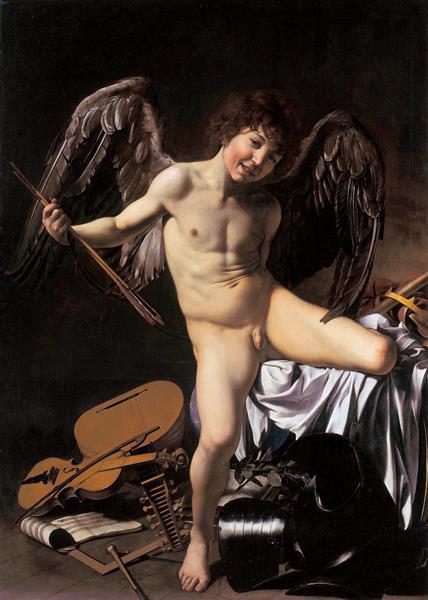
oil, canvas · 1602
Medium
oil, canvas
Period
Baroque · Tenebrism
Held at
Gemäldegalerie, Berlin, Germany