The Lute Player
Hermitage Museum, Saint Petersburg, Russia
Caravaggio, 1596
The way a single figure emerges from the deep, enveloping darkness in "The Lute Player" immediately pulls you in. It's a masterful demonstration of Tenebrism, a Baroque technique that uses intense contrasts of light and shadow, letting the forms of the player and their instrument appear almost sculpted against the canvas. This striking drama, rendered in oil, gives a palpable weight and texture to the scene, highlighting the intensity of the musical moment. What's intriguing is that this compelling composition exists in more than one form. Caravaggio, the Italian Baroque master, created multiple versions of this very scene; one resides in the Hermitage Museum, St. Petersburg, and another, known as the Wildenstein version, had a long exhibition history at the Metropolitan Museum of Art. There's even a third iteration, the Badminton House version, considered a copy, which was recently exhibited alongside the Hermitage picture at the Galleria Borghese. To contemplate these distinct but related works, each an oil on canvas from 1596, is to consider the power of repetition and nuance in Caravaggio's vision, echoing across different collections and continents.
No thoughts yet. Be the first to share one.
TagsBaroqueTenebrismoilcanvasportrait
3.00 (3 ratings)
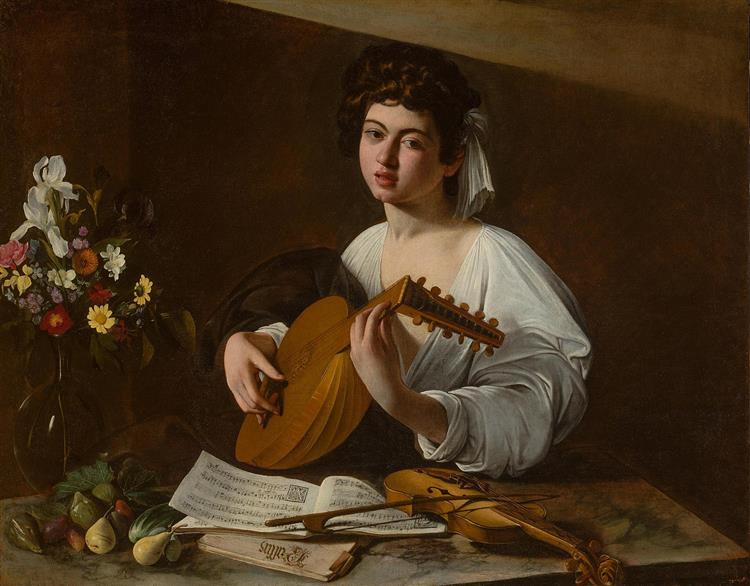
oil, canvas · 1596
Medium
oil, canvas
Period
Baroque · Tenebrism
Held at
Hermitage Museum, Saint Petersburg, Russia