John the Baptist
Capitoline Museums, Rome, Italy
Caravaggio, 1602
The painting "John the Baptist," from 1602, executed by Caravaggio in oil on canvas, belongs to the powerful Baroque movement and employs his signature tenebrism. While direct visual details for this specific work are scarce in the provided material, we know Caravaggio explored the figure of Saint John the Baptist repeatedly throughout his career, creating at least eight such works. The Baroque style often sought to engage the viewer dynamically, presenting figures in moments of intense psychological presence. Considering Saint John's role as a preacher, one might imagine this canvas drawing on that fervent, prophetic aspect, perhaps with a dramatic turn of his head or a gesture mid-sentence, mirroring the described engagement found in other Baroque interpretations of the figure. The very nature of tenebrism, with its stark contrasts of light and shadow, would invariably lend an intense, almost startling immediacy to the scene, pulling key elements into sharp relief against deeper darkness. This artistic choice alone suggests a scene designed not just to be observed, but to confront, making one wonder what silent dialogue is unfolding within that dramatic light.
No thoughts yet. Be the first to share one.
TagsBaroqueTenebrismoilcanvasreligious painting
3.75 (2 ratings)
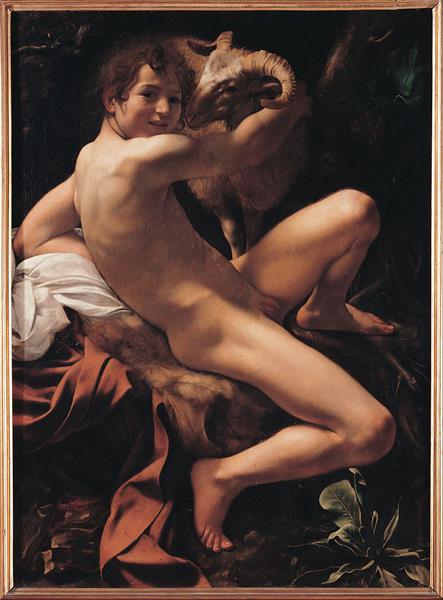
oil, canvas · 1602
Medium
oil, canvas
Period
Baroque · Tenebrism
Held at
Capitoline Museums, Rome, Italy