Young acrobat and clown
Private Collection
Pablo Picasso, 1905
A composition featuring a young acrobat and a clown is brought to life through the distinct characteristics of charcoal and pastel on paper. Executed by Pablo Picasso in 1905, this work belongs to the Expressionist movement. The selection of charcoal implies strong lines and perhaps a stark graphic quality, while pastel introduces softer nuances, allowing for variations in tone or subtle hints of color within the drawing. The chosen medium creates a directness, presenting these two figures in a way that feels immediate and perhaps unguarded. The very act of drawing on paper lends a certain intimacy, contrasting with the often public personas of acrobats and clowns. One might consider how Expressionism here shapes the depiction of these archetypal figures, focusing less on precise representation and more on an internal state or an evoked mood. The simple yet potent combination of charcoal and pastel, applied to paper, leaves a lasting impression, prompting thought about the nature of performance and individual identity.
No thoughts yet. Be the first to share one.
TagsExpressionismcharcoalpastelpapergenre painting
2.50 (2 ratings)
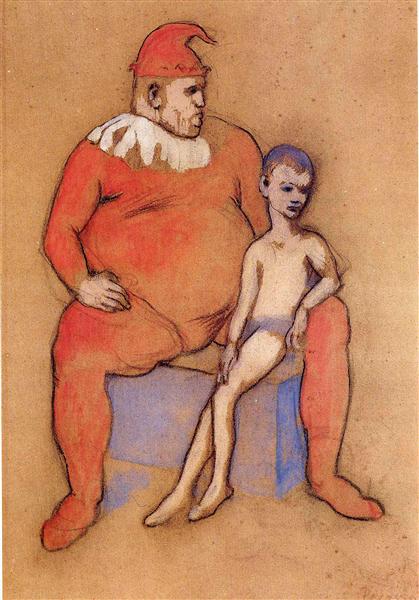
charcoal, pastel, paper · 1905
Medium
charcoal, pastel, paper
Period
Expressionism
Held at
Private Collection