Guernica
Museo Nacional Centro de Arte Reina Sofía (MNCARS), Madrid, Spain
Pablo Picasso, 1937
A room explodes with screaming, dying adults, children, and animals, rendered in a stark monochrome palette of grey, black, and white. This isn't just a depiction of chaos; it
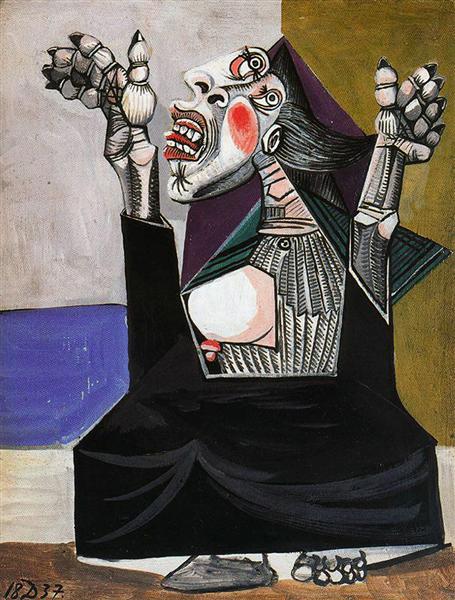
is a visceral response to terror. Picasso, working rapidly in 1937, infused the canvas with jagged Cubist forms, amplifying the sense of panic. A blazing light cuts through the darkness, perhaps a bomb itself, illuminating a woman cradling a dead child – a stark pieta image – and a horse, symbolizing innocent people caught in the conflict. The monochromatic choice feels deliberate, echoing photojournalistic realism while simultaneously heightening the drama by highlighting key faces and objects in stark white. The lack of color intensifies the flattened forms, drawing our attention to the sheer brutality. Though it avoids direct allusion to the 1937 bombing of Guernica, this painting became a powerful international symbol against the barbarity of war, banned from exhibition in Spain until 1975. It lingers as a potent, generic plea, its symbols of a bull, a dead soldier, and a prison cell still unsettling.
No thoughts yet. Be the first to share one.
TagsSurrealismCubismoilcanvasallegorical painting
4.83 (9 ratings)
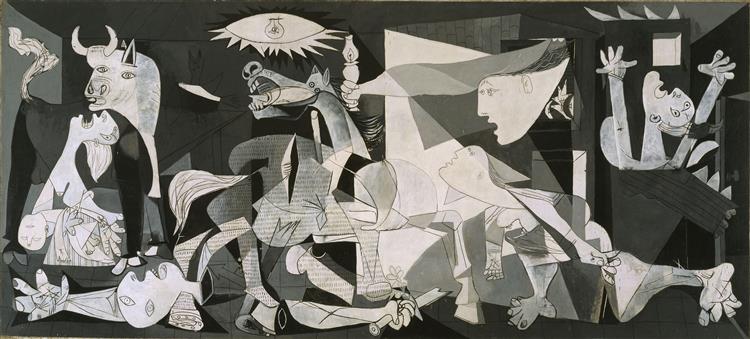
oil, canvas · 1937
Medium
oil, canvas
Period
Surrealism · Cubism
Held at
Museo Nacional Centro de Arte Reina Sofía (MNCARS), Madrid, Spain