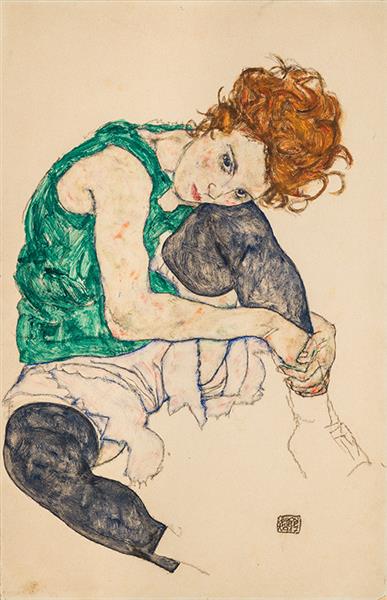
Woman in Black Stockings
Private Collection
Egon Schiele, 1913
The way Schiele often depicts the human form, especially in watercolor on paper, makes you question the very concept of repose. For "Woman in Black Stockings," knowing his reputation for intensity and raw sexuality, one expects to encounter that characteristic expressive line. His work frequently features twisted body shapes, suggesting an internal unease or confrontation rather than a simple portrait. Imagine the immediacy of watercolor, allowing for a certain transparency and fluidity, yet in Schiele's hands, it likely conveys a stark, almost unvarnished observation. The medium itself, paper, emphasizes the directness, the artist's hand visible without the heavy layering of oil. This particular work, dating from 1913, falls squarely within his period as an early exponent of Expressionism, a movement known for its emotional rather than objective reality. Schiele, mentored by Gustav Klimt, developed a style where the depiction of the figure felt both vulnerable and defiant. What internal world might this "Woman in Black Stockings" inhabit, rendered with such an intense, probing gaze that is typical of Schiele's output?
No thoughts yet. Be the first to share one.
TagsExpressionismwatercolorpaperportrait
4.00 (1 rating)
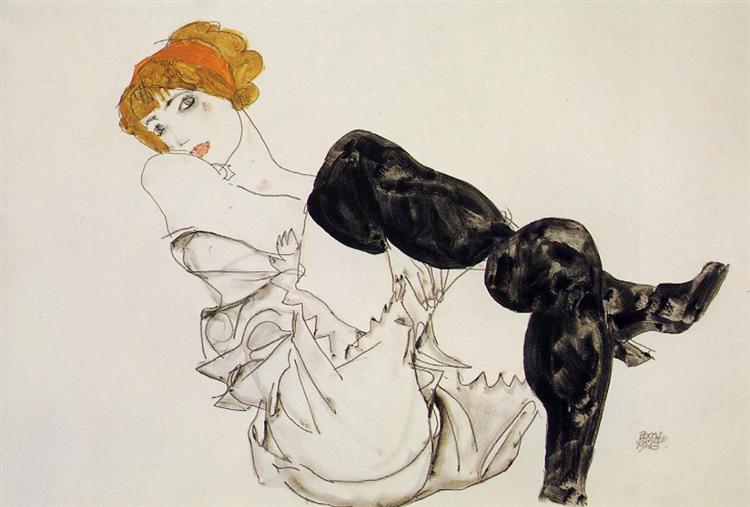
watercolor, paper · 1913
Medium
watercolor, paper
Period
Expressionism
Held at
Private Collection