The Family
Belvedere, Vienna, Austria
Egon Schiele, 1918
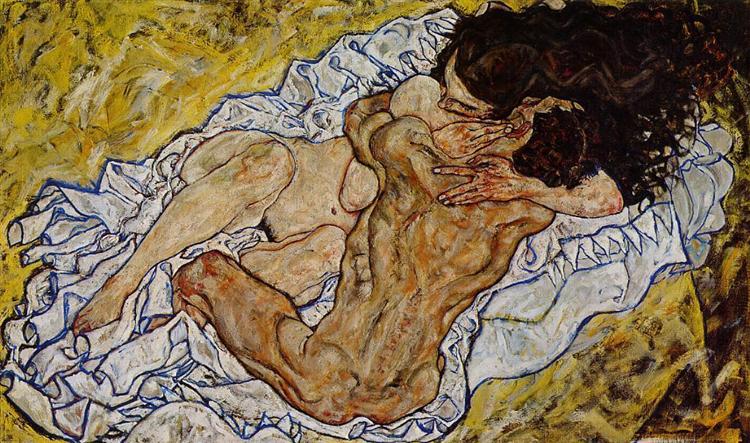
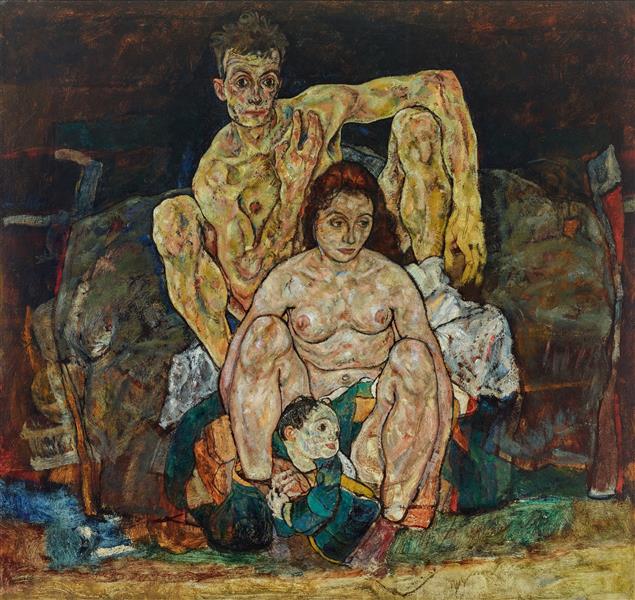
The very idea of "The Family," conceived by Egon Schiele in oil on canvas in 1918, immediately suggests an intensely personal vision shaped by Expressionism. Schiele, an Austrian painter, was renowned for his use of an expressive line and twisted body shapes, characteristics that would undoubtedly define the figures within this particular work. The medium of oil on canvas would allow for a raw, material presence, consistent with his intense and unvarnished approach typical of an early exponent of Expressionism. His work is noted for its raw sexuality, a characteristic that, when considered alongside a subject as universal as family, creates a fascinating tension. Unlike the often decorative figurative works of his mentor, Gustav Klimt, Schiele's aesthetic is strikingly direct. The enduring question is how this distinctive, almost confrontational intensity, filters into the intimate dynamics of a family unit, leaving one to ponder the visible, perhaps uncomfortable, truths within such fundamental relationships.
No thoughts yet. Be the first to share one.
TagsExpressionismoilcanvasportrait
4.50 (2 ratings)
oil, canvas · 1918
Medium
oil, canvas
Period
Expressionism
Held at
Belvedere, Vienna, Austria