Triptych March 1974
Francis Bacon, 1974
Imagine three panels, joined, each a distinct statement yet part of a larger, unsettling whole, a format Francis Bacon embraced extensively. This particular triptych from March 1974, known simply by its date, immediately suggests Bacon's deep engagement with the multi-panel structure, a practice he developed from smaller works into grander statements after 1962. His significant output includes 28 known triptychs, a format he used consistently until 1986. The very nature of a triptych, particularly within an Expressionist context, implies a fragmented narrative or a series of intense psychological states across those individual canvases, each demanding its own visceral response while contributing to a cumulative effect. We know Bacon worked with these multi-panel compositions for decades, creating powerful sequences, whether exploring themes related to friends or, notably, his 'Black Triptychs' following the death of George Dyer in 1971. Though the specific medium here is unknown, the designation of 'Expressionism' for this work from 1974 points to an expected raw emotionality, perhaps distorted forms, and a potent, subjective vision. How do these three segments from 1974 interact? Do they present a progression, a simultaneity of anguish, or perhaps multiple perspectives on a single, intense moment, leaving us to piece together the unspoken drama unfolding across its unknown surfaces?
No thoughts yet. Be the first to share one.
TagsExpressionismfigurative
5.00 (1 rating)
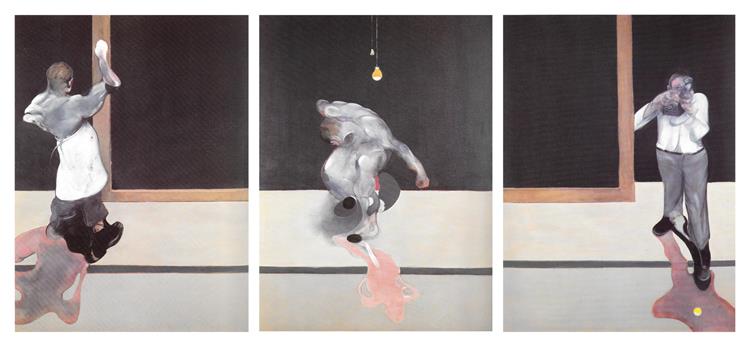
1974
Period
Expressionism

.jpg!Large.jpg)