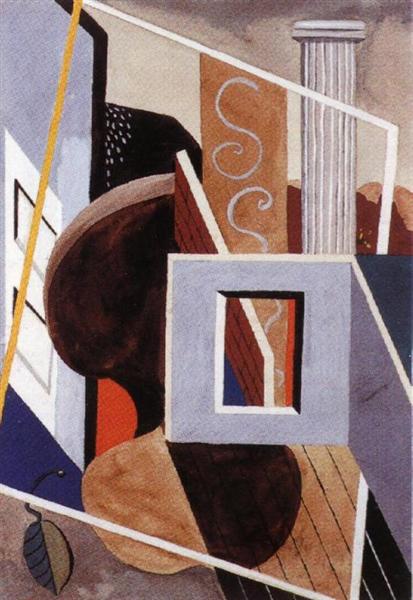
Gouache
Francis Bacon, 1929
To encounter Francis Bacon's "Gouache" from 1929, especially with its unknown medium, presents an immediate enigma. How does a work titled so distinctly for a specific medium defy categorization in the historical record? The very name "Gouache" brings to mind a vibrant, opaque water-based paint, often used with swift, decisive strokes, as seen in other works from the period. For instance, Salvador Dalí, just a few years later, would combine gouache with graphite on a commercially printed magazine page, showcasing its versatility and capacity for unexpected juxtapositions. Yet, for Bacon's early piece, the material properties remain shrouded. This uncertainty forces a focus on its declared movement, Expressionism. We are left to imagine the emotional force and distorted realities characteristic of Expressionist art from this era. Did Bacon manipulate light and shadow with the same raw intensity he would later become known for, even if the precise materials remain elusive? The title itself, "Gouache," becomes a ghost of an intention, a whisper of a chosen medium that never fully materialized for the historical record, leaving its visual impact to our speculative gaze.
No thoughts yet. Be the first to share one.
TagsExpressionismfigurative
5.00 (1 rating)
1929
Period
Expressionism
.jpg!Large.jpg)
.jpg!Large.jpg)