The dancer
Gustav Klimt, 1918
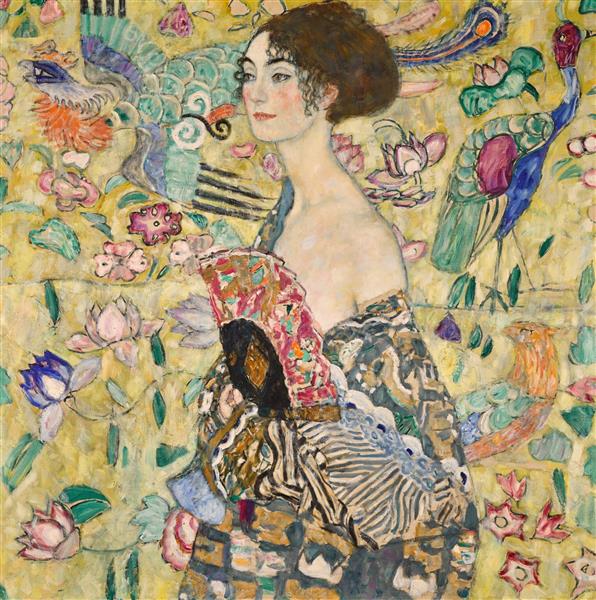
The year 1918, Gustav Klimt’s final, brings us "The dancer," an oil on canvas piece whose very title suggests a study in captured motion and form. As an Austrian symbolist painter, Klimt’s work frequently embraced the decorative and emblematic. This piece, falling squarely within the Art Nouveau and Japonism movements, offers cues to its visual potential. One can anticipate the interplay of characteristic elements from these styles: perhaps the fluid, sinuous lines of Art Nouveau defining a figure, or the striking, flattened perspectives and bold outlines often found in Japonism. These elements, rendered in the rich texture of oil paint on canvas—a medium Klimt frequently employed across his prolific output of over 200 paintings—would define the visual impact. The choice of "The dancer" as a subject, interpreted through the lens of modern and Japanese aesthetic principles, prompts reflection on the abstraction of movement itself. How does an artist renowned for his intricate compositions translate the ephemeral grace of a dancer onto a fixed surface, particularly in the closing chapter of his remarkable career?
No thoughts yet. Be the first to share one.
TagsArt Nouveau (Modern)Japonismoilcanvasportrait
4.50 (1 rating)
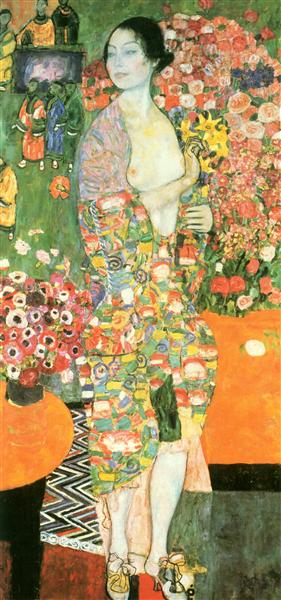
oil, canvas · 1918
Medium
oil, canvas
Period
Art Nouveau (Modern) · Japonism