Death and Life
Leopold Museum, Vienna, Austria
Gustav Klimt, 1916
The raw, unavoidable tension in Gustav Klimt's "Death and Life" is what truly resonates. As an oil-on-canvas painting completed in 1915, after being started in 1908, it draws you into its allegorical world, firmly rooted in an Art Nouveau (Modern) style. The sheer scale, measuring 178 by 198 centimeters, hints at the monumental nature of its contrasting themes. It’s held at the Leopold Museum in Vienna. The fact that Klimt labored on this vision for seven years, across a period of significant global change, lends a certain weight to its depiction of "Death and Life." This isn't a quick sketch of an idea; it's a prolonged meditation on fundamental existence. While specific colors are not mentioned, one can infer the dramatic visual language necessary to portray such a duality on canvas. The very title suggests a dynamic interplay, where perhaps one element is not merely a counterpoint but an intrinsic part of the other. It makes you consider how these two forces, often seen as opposites, might be intricately woven together in his allegorical narrative.
No thoughts yet. Be the first to share one.
TagsArt Nouveau (Modern)oilcanvasallegorical painting
5.00 (1 rating)
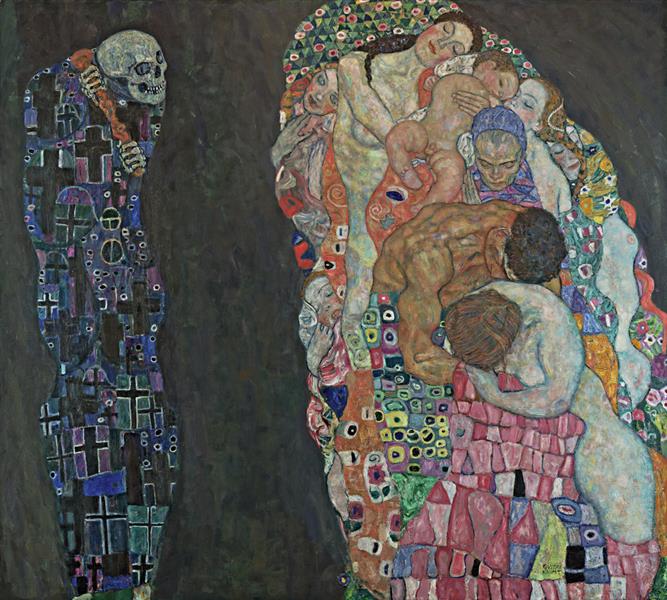
oil, canvas · 1916
Medium
oil, canvas
Period
Art Nouveau (Modern)
Held at
Leopold Museum, Vienna, Austria