Music
Bavarian State Painting Collections, Munich, Germany
Gustav Klimt, 1895
Gustav Klimt's 'Music,' from 1895, offers a fascinating glimpse into the early period of Art Nouveau through its choice of subject and medium. Rendered in oil on canvas, this work belongs to a significant moment in Modern art when artists began to explore themes with profound symbolic resonance. The absence of specific visual details in the available information prevents a deep dive into its composition or particular figures. However, knowing Klimt's prolific output
—believed to be over 200 paintings, with more than 160 known
—and his association with Art Nouveau, one can imagine how he might have approached the ethereal concept of music. The use of oil on canvas suggests a painterly surface, typical of the era’s academic and evolving styles. This piece likely plays with the visual interpretation of sound, exploring harmony, rhythm, or allegorical figures. What intrigues me is how an artist, at this nascent stage of modernism, translated an abstract, sensory experience into a tangible work, especially given the decorative and symbolic tendencies of his movement.
No thoughts yet. Be the first to share one.
TagsArt Nouveau (Modern)oilcanvasallegorical painting
4.50 (1 rating)
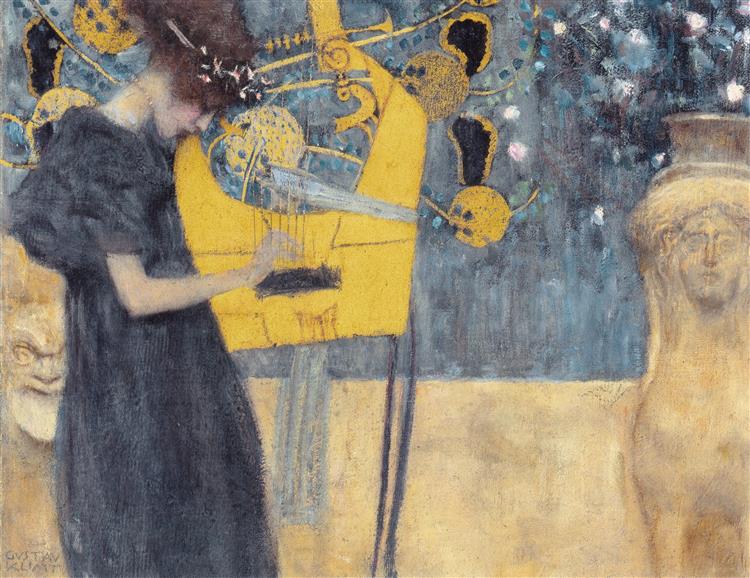
oil, canvas · 1895
Medium
oil, canvas
Period
Art Nouveau (Modern)
Held at
Bavarian State Painting Collections, Munich, Germany