L.H.O.O.Q, Mona Lisa with moustache
Philadelphia Museum of Art, Philadelphia, PA, US
Marcel Duchamp, 1919
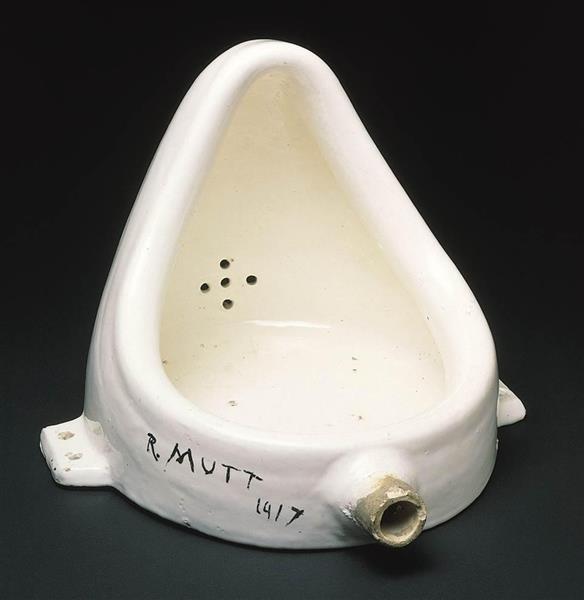
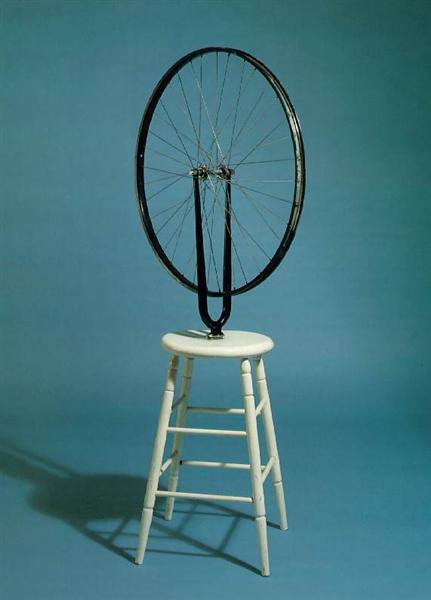
Imagine encountering the most famous smile in art history, not in a gilded frame, but scrawled over with a pencil moustache and beard. Marcel Duchamp’s L.H.O.O.Q., conceived in 1919, is fundamentally this: a cheap postcard reproduction of Leonardo da Vinci’s early 16th-century Mona Lisa, altered with simple pencil marks. The effect is immediate and audacious, transforming a universally revered image into something irreverent. The delicate, enigmatic expression of the original is deliberately disrupted by the stark, almost crude lines of the moustache and beard. The subtle play of light and shadow on her face is now overlaid by a defiant, almost playful gesture. It’s an act that takes the commonplace – a tourist postcard – and elevates it, or perhaps subverts it, through a minimal, yet profound, intervention.This work exemplifies what Duchamp termed a “readymade,” or more specifically, a rectified ready-made. The readymade concept involves taking utilitarian objects not typically considered art and transforming them by simply adding to them, changing them, or even just renaming and reorienting them within an artistic context. Here, the “found object” isn't a urinal or a bicycle wheel, but a mass-produced image of cultural high art. The choice of a “cheap postcard reproduction” emphasizes its disposability, a stark contrast to the original’s priceless status. The pencil, a humble drawing tool, underscores the straightforward, almost casual nature of the subversion.What lingers is the question of appropriation and artistic intent. While Duchamp is often associated with pioneering such artistic provocations, it’s intriguing to learn that Eugène Bataille had already produced a Mona Lisa smoking a pipe, titled Le rire, in 1883. This earlier instance suggests a rich, albeit perhaps lesser-known, lineage of artists engaging with and playfully deconstructing iconic imagery. Duchamp's act, then, becomes part of a continuous dialogue, a playful challenge to notions of originality and sacredness in art. It prompts us to reconsider where the boundaries of artistic creation lie, and what truly constitutes an original thought.
No thoughts yet. Be the first to share one.
TagsDadapencilready-madeportrait
4.00 (1 rating)

pencil, ready-made · 1919
Medium
pencil, ready-made
Period
Dada
Held at
Philadelphia Museum of Art, Philadelphia, PA, US