Fountain
Tate Modern, London, UK
Marcel Duchamp, 1917
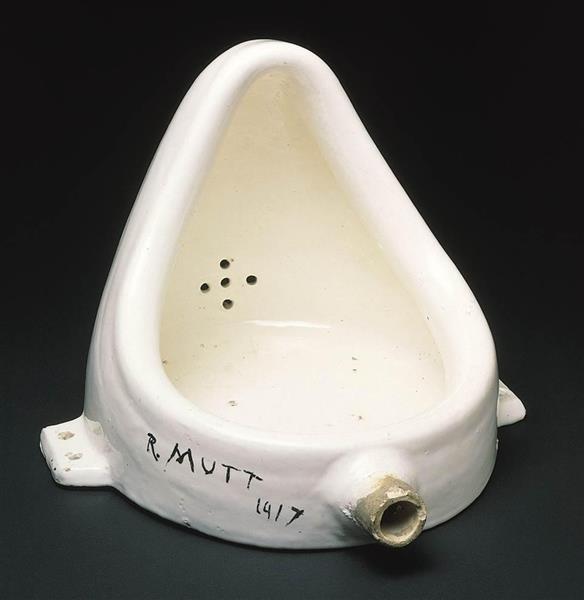
The immediate shock of seeing a standard urinal, laid flat on its back and signed 'R. Mutt 1917', still feels potent almost a century later. This object, a 'ready-made' Duchamp chose, challenges the very definition of art itself. The Tate’s version, a 1964 replica, is crafted from glazed earthenware, painted to meticulously resemble the original porcelain, with its audacious signature reproduced in black. It's not just the everyday nature of the object that’s striking, but its deliberate reorientation, turning a utilitarian fixture into something unfamiliar and almost sculptural. The choice of 'R. Mutt' as a false signature and the subsequent discussion around its rejection by an exhibition board are fascinating. Duchamp himself alluded to the name’s origin from a sanitary equipment manufacturer and a comic strip, adding a layer of playful subversion. Intriguingly, some note how the inverted form of the urinal can resemble a female body, aligning with Duchamp’s known engagement with gender boundaries. This piece isn't just about the object; it's about the radical shift in perspective it demands, forcing a re-evaluation of authorship and aesthetic value. The sheer audacity of its presentation continues to provoke thought.
No thoughts yet. Be the first to share one.
TagsDadaready-madeinstallation
5.00 (2 ratings)
ready-made · 1917
Medium
ready-made
Period
Dada
Held at
Tate Modern, London, UK