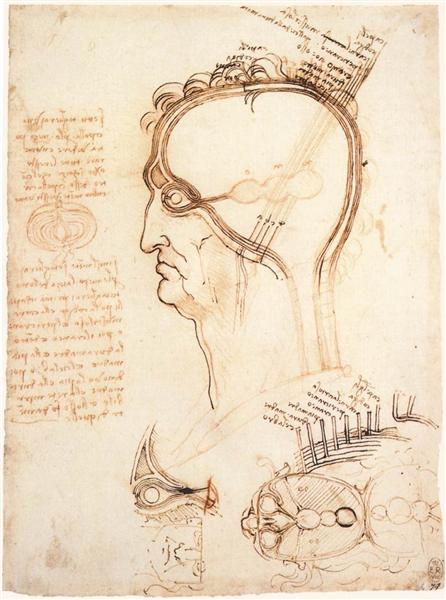
Comparison of scalp skin and onion
Leonardo da Vinci, 1489
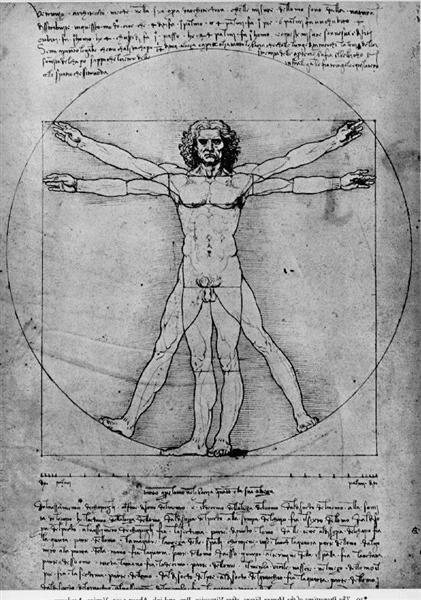
The unsettling pairing in "Comparison of scalp skin and onion" immediately draws attention to the intricate textures and underlying structures that fascinated Leonardo da Vinci around 1489. Rendered in chalk and ink on paper, one can almost see the artist meticulously detailing the layered cellular forms of an onion bulb, perhaps sectioned, alongside the delicate epidermal layers of human scalp. This particular approach likely represents an Early Renaissance mind deeply engaged in comparative anatomy, seeking universal principles within seemingly disparate biological forms. Such a drawing would prompt viewers to look beyond superficial differences, suggesting that the macroscopic and microscopic worlds might share surprising organizational patterns. It's not just an artistic rendering but a fragment of rigorous scientific observation, a quiet inquiry into life's hidden analogies. The starkness of the medium
chalk and ink
would highlight precise contours and cross-sections, making visible the unseen symmetries that permeate nature. This work leaves us to ponder the artist's enduring quest to peel back the layers of existence, finding commonality in the most unexpected places.
No thoughts yet. Be the first to share one.
TagsEarly Renaissancechalkinkpapersketch and study
5.00 (1 rating)
chalk, ink, paper · 1489
Medium
chalk, ink, paper
Period
Early Renaissance