Cannibalism of the Praying Mantis of Lautreamont
Salvador Dali, 1934
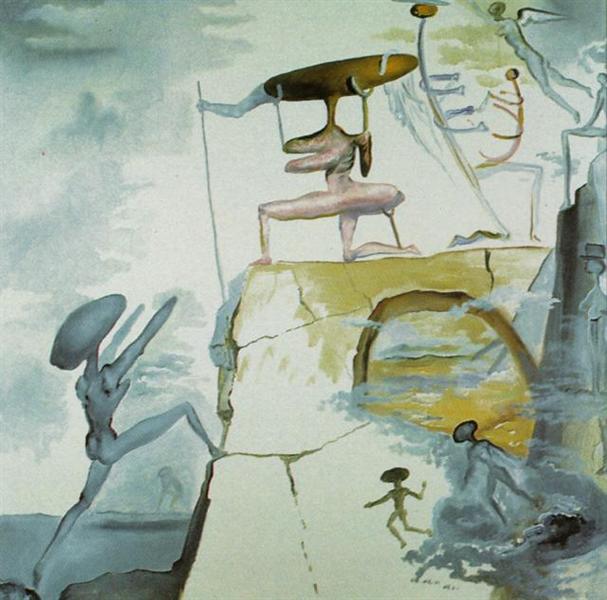
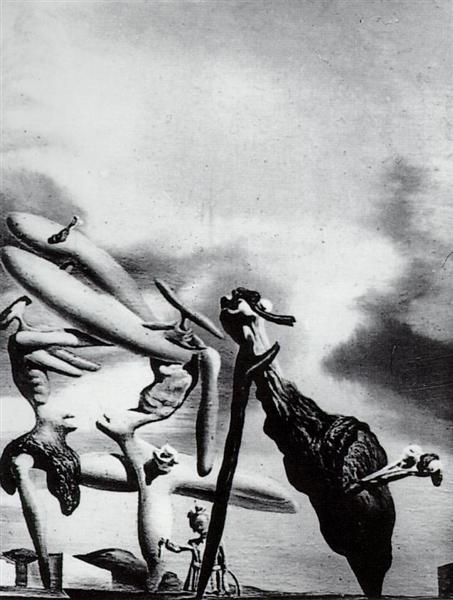
The immediate jolt from the title, "Cannibalism of the Praying Mantis of Lautreamont," sets a potent, unsettling tone even before one considers its creator. Dali's choice of such a loaded phrase instantly conjures a world of primal instinct and dark psychological drama, characteristic of his Surrealist output from 1934. The very idea of a praying mantis, notorious for its predatory mating rituals, engaged in "cannibalism" – a redundancy that amplifies the horror – fused with the literary shadow of Lautreamont, speaks volumes. One is compelled to envision a scene of grotesque intimacy, perhaps an intense, fragmented tableau where instinct overrides all else, rendered with the precise, hallucinatory detail typical of the movement. While the exact medium remains unknown, the title suggests a visual experience meant to disturb and fascinate, pushing the boundaries of what art can explore regarding the subconscious and the irrational. The tension between the elegance of a mantis and the brutality of its nature, combined with the name Lautreamont, creates an open question: how does Dali concretize such a vivid, almost literary, nightmare into a visual form that lingers?
No thoughts yet. Be the first to share one.
TagsSurrealismillustration
3.00 (1 rating)
1934
Period
Surrealism