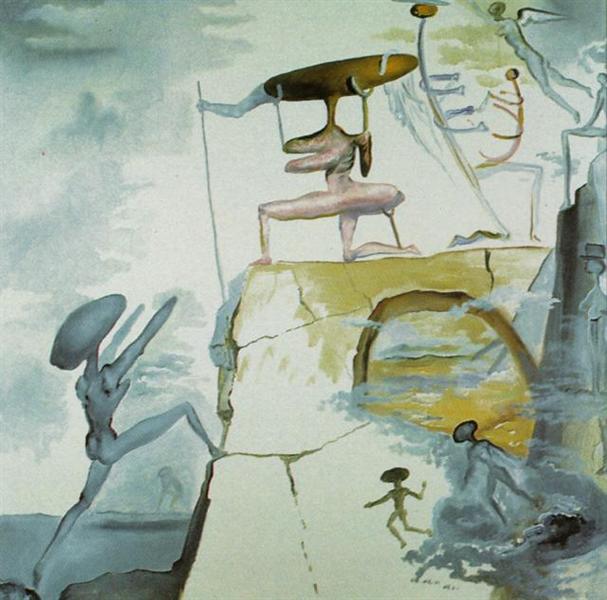
Atmospherocephalic Figures
Salvador Dali, 1982
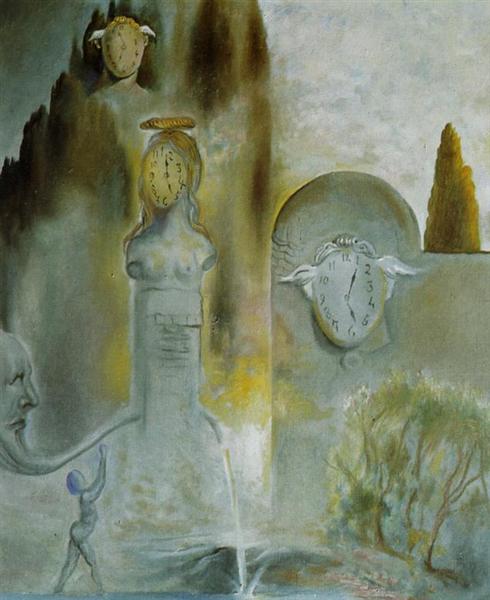
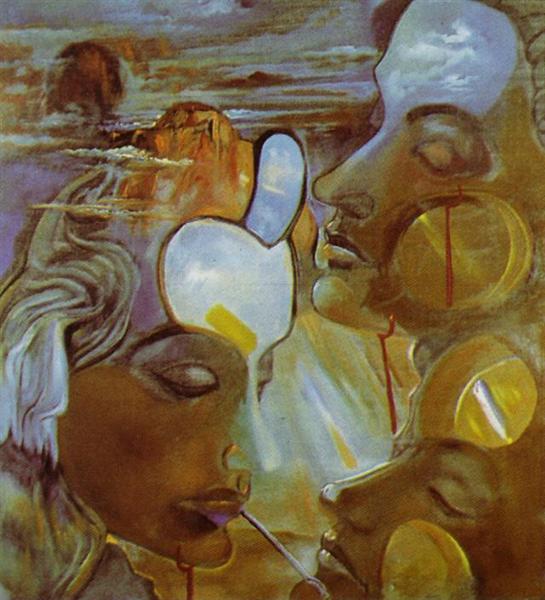
A sense of the fantastical instantly arises from the very title, "Atmospherocephalic Figures," a Surrealist work from 1982 by Salvador Dali. This intriguing name alone suggests a bizarre fusion: figures whose heads might be composed of, or interacting with, atmospheric phenomena. This verbal imagery points to Dali’s enduring fascination with the subconscious and the irrational, central tenets of the Surrealist movement he championed. Imagining what forms these "atmospherocephalic" entities might take – perhaps swirling clouds forming facial features, or figures whose craniums dissipate into an ethereal mist – underlines the work's inherent mystery. The fact that its medium is currently unknown only deepens this intrigue, leaving us to wonder if Dali chose paint, sculpture, or another form entirely to manifest this elusive concept. What kind of unsettling beauty or psychological depth did Dali intend to convey through these figures whose very being is tied to the atmosphere? The lack of specific visual information transforms the artwork into a mental landscape, prompting our own surreal interpretations of its potential forms and textures.
No thoughts yet. Be the first to share one.
TagsSurrealismfigurative
5.00 (1 rating)
1982
Period
Surrealism