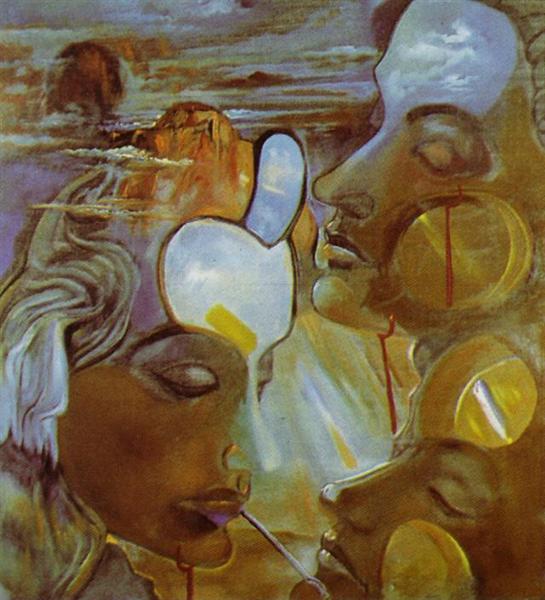
Mirror Women - Mirror Head
Salvador Dali, 1982
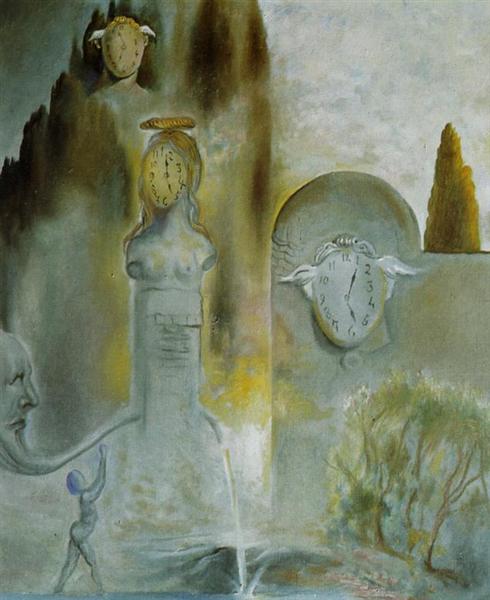
The very phrase "Mirror Women - Mirror Head," from 1982, immediately conjures a specific kind of disquiet, typical of Salvador Dalí's Surrealist practice. The title itself suggests a complex interplay of identity and perception, hinting at a world where self-image is not fixed but refracted, perhaps even fractured into multiple visions. Without knowing the exact medium beyond its classification as "unknown," one can still anticipate a visual language that delves deeply into the psychological realm. The repetition of "Mirror" in both "Women" and "Head" evokes a profound doubling, a recursive gaze that might reveal as much about the viewer's own perceptions and inner thoughts as it does about the depicted subjects. This work by Dalí signals a continued, almost obsessive, engagement with themes of fragmentation and the subconscious mind that so powerfully defined Surrealism. The unknown medium adds another layer of intrigue; it forces us to consider the artwork's core concept purely through its evocative title and artistic movement, rather than through tangible artistic choices of paint, sculpture, or other materials. The piece itself then becomes a compelling mental construct, an idea of a fragmented reflection. What possibilities of unsettling recognition or profound self-discovery might emerge from such a conceptually rich and ambiguous space?
No thoughts yet. Be the first to share one.
TagsSurrealismsymbolic painting
5.00 (1 rating)
1982
Period
Surrealism