Annunciation
Uffizi Gallery, Florence, Italy
Leonardo da Vinci, 1472
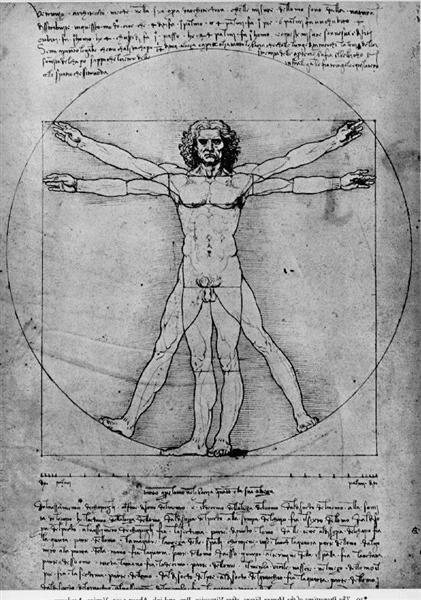
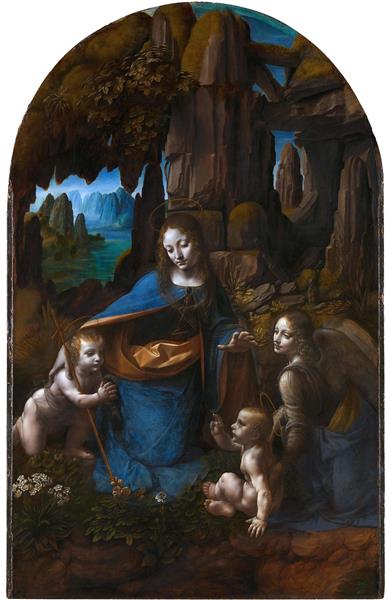
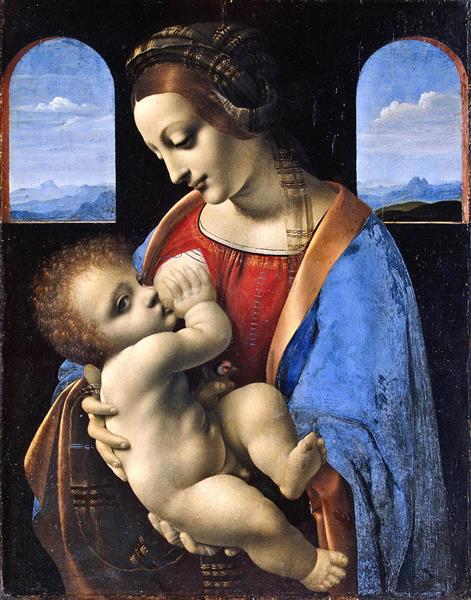
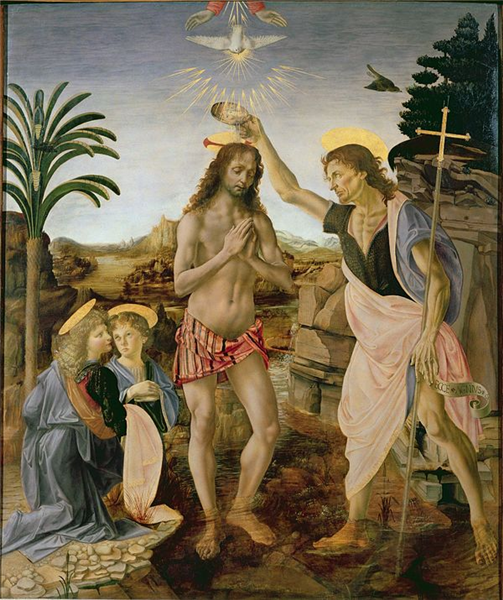
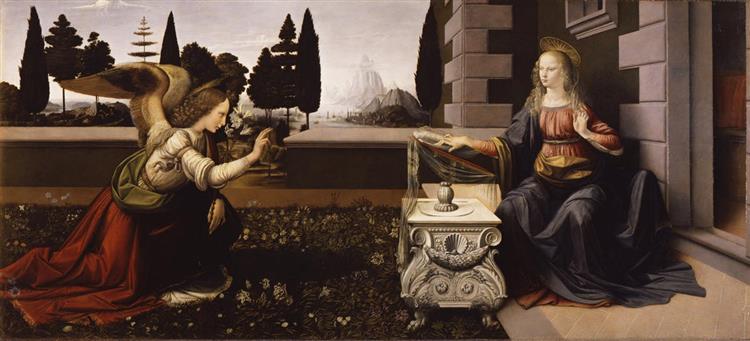
The scene itself is an unexpected blend of the sacred and the immediate. You expect an Annunciation to be solemn, perhaps within a dim interior, but Leonardo da Vinci’s c. 1472 portrayal opens into a sunlit, almost airy courtyard of a Renaissance palace. Beyond the figures of the Angel Gabriel and the Virgin Mary, a vibrant Tuscan landscape stretches to a distant seascape, painted with the sfumato technique, which softens transitions between colors, creating an illusion of continuous air and mist. This early work, completed while Leonardo was an apprentice in Andrea del Verrocchio's studio, utilizes oil and tempera on a large poplar panel, an untraditional choice for the time, when oil was more commonly used on canvas. What truly draws you in is the carpet of spring flowers beneath the figures. It’s not just decorative; each blossom holds a layer of meaning. Lily whites, daisies, white champions, morning glories, and lavender symbolize the Virgin’s innocence and purity. Yet, nestled among them are irises, passion flowers, and myositis, associated with her feelings of love and mourning. This rich symbolism extends to the marble lectern situated between Mary and Gabriel. Its design, reminiscent of both a Renaissance baby cradle and a sarcophagus, cleverly links the impending birth of Christ with his eventual death. Classical motifs like acanthus leaves, garlands, scallop shells, and lion’s paws adorn its surface, an echo of sarcophagi like the one Verrocchio designed for Giovanni de’ Medici. This painting, housed in the Uffizi in Florence, was once attributed to other Florentine painters until radiographic and spectrographic tests, along with newly discovered preparatory sketches, affirmed Leonardo's authorship. His extensive preparatory work is evident, with sketches like "Lily" and "The Study of a Sleeve" demonstrating his careful planning. The complex layering of symbolism—life in the blooming meadow juxtaposed with the mortuary allusion of the lectern—underscores a profound contemplation of Christ’s journey, all within the initial moment of his announcement. It makes you wonder how much foresight an artist can imbue into a single, pivotal scene.
No thoughts yet. Be the first to share one.
TagsEarly Renaissanceoilpaneltemperawoodreligious painting
4.00 (1 rating)
oil, panel, tempera, wood · 1472
Medium
oil, panel, tempera, wood
Period
Early Renaissance
Held at
Uffizi Gallery, Florence, Italy