Wreckers Coast of Northumberland
Yale University Art Gallery (Yale University), New Haven, CT, US
William Turner, 1834
The very title, "Wreckers Coast of Northumberland," by William Turner from 1834, conjures a scene of immense, almost violent energy. Knowing Turner's reputation as an English Romantic painter, renowned for his expressive colouring and turbulent marine paintings, one anticipates a canvas dominated by the raw power of nature. His oil on canvas works from this period often reveal imaginative landscapes where the elements rage, perhaps with crashing waves, agitated white spray, and a dramatic, storm-laden sky rendered with broad, almost abstract strokes. The palette would likely be rich and atmospheric, conveying the gloom and light of a tempestuous day. The 'wreckers' on the Northumberland coast would be depicted not merely as figures, but as small, struggling participants in this grand, tumultuous spectacle, their actions underscored by the immense, untamed environment. This isn't just a geographical location; it's a profound engagement with the forces of the natural world, characteristic of how Turner elevated landscape painting. It makes you consider how his fascination with marine turbulence and his bold use of colour set the stage for later artistic movements, even as this work holds a powerful, immediate emotional impact, leaving one pondering the fragile line between human endeavor and nature's overwhelming might.
No thoughts yet. Be the first to share one.
TagsRomanticismoilcanvasmarina
4.50 (1 rating)
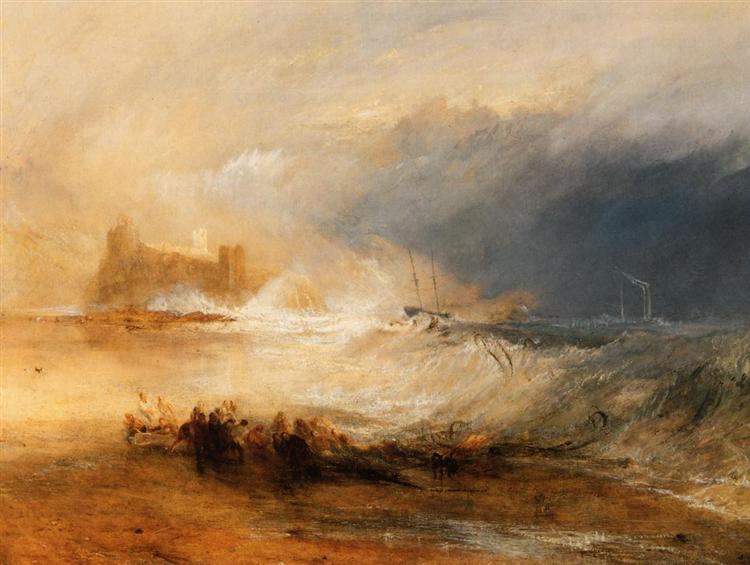
oil, canvas · 1834
Medium
oil, canvas
Period
Romanticism
Held at
Yale University Art Gallery (Yale University), New Haven, CT, US