Snow Storm - Steamboat off a Harbour's Mouth
Tate Britain, London, UK
William Turner, 1842
Imagine standing before "Snow Storm - Steamboat off a Harbour's Mouth." What immediately strikes you is the sheer chaotic energy, a maelstrom of greys and indiscernible forms. The sea and sky merge into a single, tumultuous entity, defying any clear horizon or landmark. Through this driving snow, one can just make out "perceptible portions of a steam-boat labouring on a rolling sea," barely holding its own against the tempest. Critics, at the time, dismissed it as nothing but a mass of "soapsuds and whitewash," complaining they couldn't find "where the steam-boat is—where the harbour begins, or where it ends." Yet, Ruskin saw it as one of the "very grandest statements of sea-motion, mist, and light." Turner himself reportedly claimed he had been "lashed to the mast" for four hours during a storm to capture such a scene, bound to record it. This legendary origin story, however, has been questioned. Is the truth of its making as obscured as the vessel within the painting? The artist's supposed frustration, muttering, "What would they have? I wonder what they think the sea's like? I wish they'd been in it," speaks volumes about the challenge of portraying nature's raw power.
No thoughts yet. Be the first to share one.
TagsRomanticismoilcanvasmarina
4.50 (1 rating)
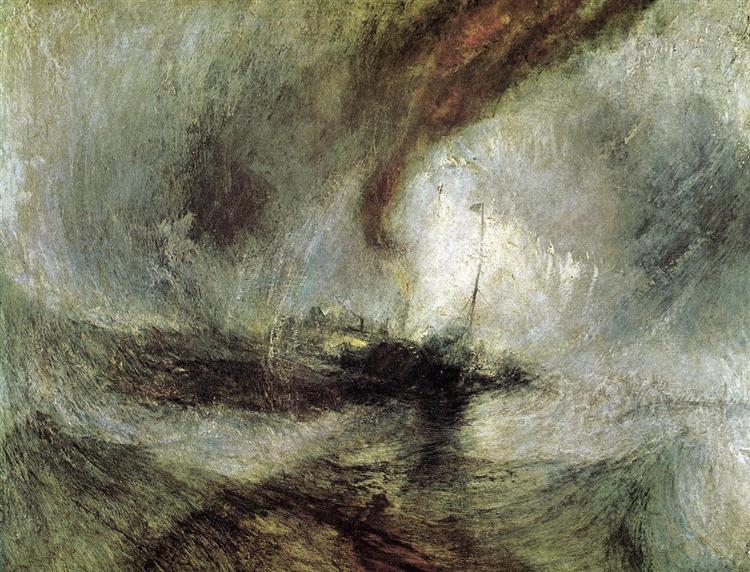
oil, canvas · 1842
Medium
oil, canvas
Period
Romanticism
Held at
Tate Britain, London, UK