The Burning of the Houses of Parliament
Philadelphia Museum of Art, Philadelphia, PA, US
William Turner, 1834
The canvas pulsates with the immense, terrible energy of the 1834 fire that consumed the old Houses of Parliament. William Turner’s oil on canvas work, firmly rooted in Romanticism, plunges us into a world defined by the dramatic interplay of light and destruction. Fiery oranges and reds erupt across the composition, likely casting an ominous glow on any surrounding elements, portraying the devastating blaze that destroyed much of the complex. This portrayal delivers a visionary spectacle of raw force. Decades later, another artist, Claude Monet, would adopt a remarkably similar vantage point when painting the Houses of Parliament in London. The Art Institute of Chicago notes Monet's viewpoint was 'close to that of the English artist J. M. W. Turner in his visionary paintings of the fire that had destroyed much of the old Parliament complex in 1834.' While Monet later found inspiration elsewhere for his treatment of 'dusk and mist,' the very act of choosing that perspective underscores how Turner’s portrayal of the inferno solidified its visual memory. It leaves us contemplating the sheer power of nature's fury and the enduring impact such cataclysms have on our shared visual landscape.
No thoughts yet. Be the first to share one.
TagsRomanticismoilcanvascityscape
4.50 (1 rating)
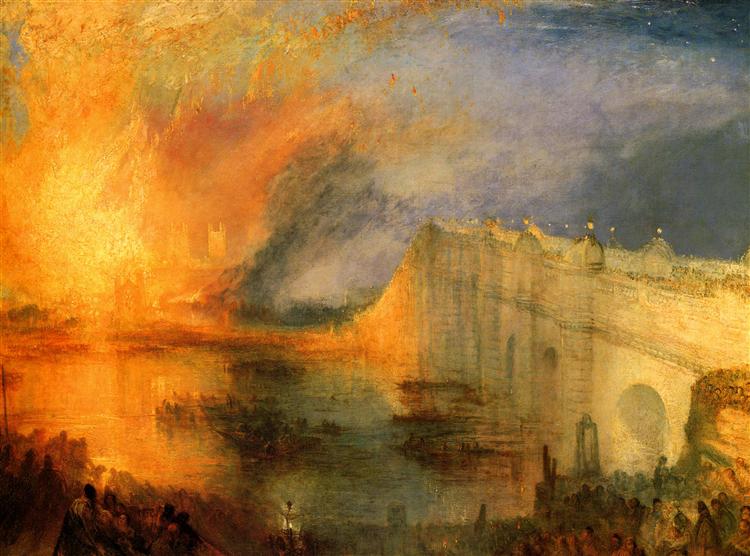
oil, canvas · 1834
Medium
oil, canvas
Period
Romanticism
Held at
Philadelphia Museum of Art, Philadelphia, PA, US