Wheatfield with Crows
Van Gogh Museum, Amsterdam, Netherlands
Vincent van Gogh, 1890
The very notion of 'Champ de blé aux corbeaux' emerging from Vincent van Gogh's hand in 1890, rendered in oil on canvas during the Post-Impressionist movement, is deeply evocative. While specific visual details from direct sources for this artwork are unavailable, we can consider the context of its creation. The title, hinting at a wheat field populated by crows, immediately suggests a powerful landscape, a subject Van Gogh often explored. His use of oil on canvas during this period typically involved a distinctive application, building up texture and conveying emotion through visible brushwork, reflecting the core tenets of Post-Impressionism. This movement often prioritized symbolic content and subjective interpretation over objective reality, aligning perfectly with a theme that could carry both naturalistic observation and profound psychological depth. To consider a work titled 'Wheat Field with Crows' by Van Gogh is to imagine a scene infused with a specific energy, perhaps a tension between the bountiful field and the dark, restless birds. Its existence alone, from that pivotal year, frames it as a piece potentially rich with the artist's intense engagement with nature and his inner world.
No thoughts yet. Be the first to share one.
TagsPost-Impressionismoilcanvaslandscape
4.80 (5 ratings)
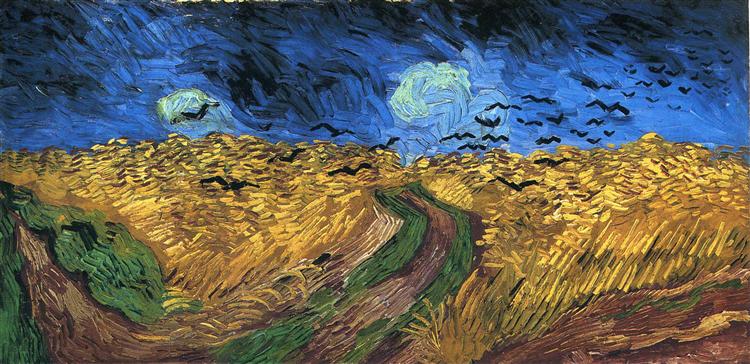
oil, canvas · 1890
Medium
oil, canvas
Period
Post-Impressionism
Held at
Van Gogh Museum, Amsterdam, Netherlands