Sower with Setting Sun
E.G. Bührle Foundation, Zürich, Switzerland
Vincent van Gogh, 1888
The profound visual impact of a sower silhouetted against a setting sun—a potent image that anchors Vincent van Gogh's 1888 oil on canvas—is immediately striking. This work, categorized under Post-Impressionism, likely vibrated with the intense color and bold brushwork characteristic of the movement, though no specific hues are detailed in available information. We perceive a solitary figure engaged in the timeless act of sowing, their form set against the dramatic, descending light of the sun. It evokes a powerful sense of effort and the grand sweep of nature, all rendered in oil on canvas. Van Gogh, who started painting later in life, created many of his significant works, including over 900 paintings and 1,100 drawings and sketches, during his last two years; this piece falls within that remarkably prolific period. The scene compels a reflection on the universal rhythm of labor framed by the monumental beauty of a day's end. It’s an exploration of light and human endeavor, leaving an indelible impression that transcends its moment, inviting us to contemplate the quiet power found in daily toil under an expansive sky.
No thoughts yet. Be the first to share one.
TagsPost-Impressionismoilcanvasgenre painting
4.75 (2 ratings)
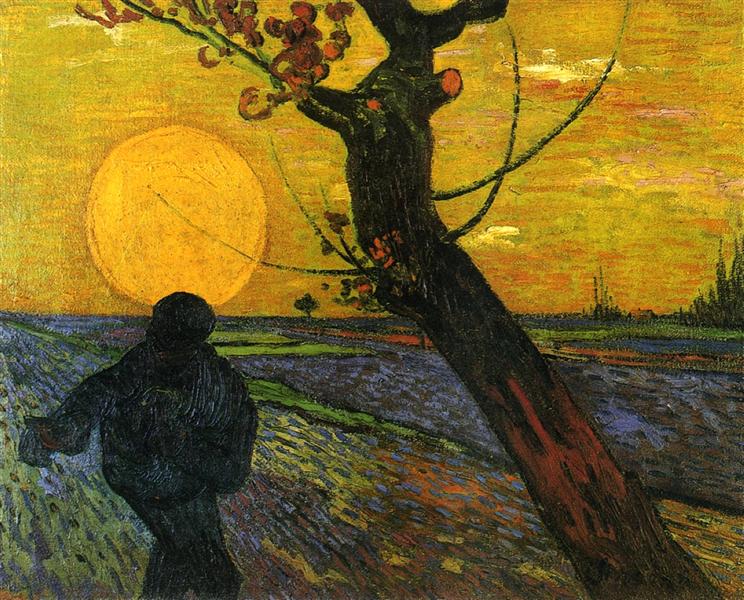
oil, canvas · 1888
Medium
oil, canvas
Period
Post-Impressionism
Held at
E.G. Bührle Foundation, Zürich, Switzerland