The Wheat Sifters
Musée des Beaux-Arts de Nantes, Nantes, France
Gustave Courbet, 1855
An embodiment of the simple realism championed by Gustave Courbet, this artwork, created in 1855, presents a stark contrast to the Romantic style prevalent at the time. It eschews perfection of line and form, opting instead for an honest portrayal of everyday life. The scene vividly illustrates details such as unclean walls, the bored expression on the face of the laying woman, and the disheveled hair of the curious boy. Courbet was known to use actual figures for his compositions, and it is believed that the two women depicted are his sisters, Zoe and Juliet, while the boy is said to be his illegitimate son, Desire Binet. Crafted using oil on canvas, the piece was first unveiled to the public in 1855 at the Salon of Paris. Its significance was further recognized when it was acquired in 1861 for the Musee des Beaux-Arts of Nantes, securing its place in art history.
No thoughts yet. Be the first to share one.
TagsRealismoilcanvasgenre painting
3.50 (2 ratings)
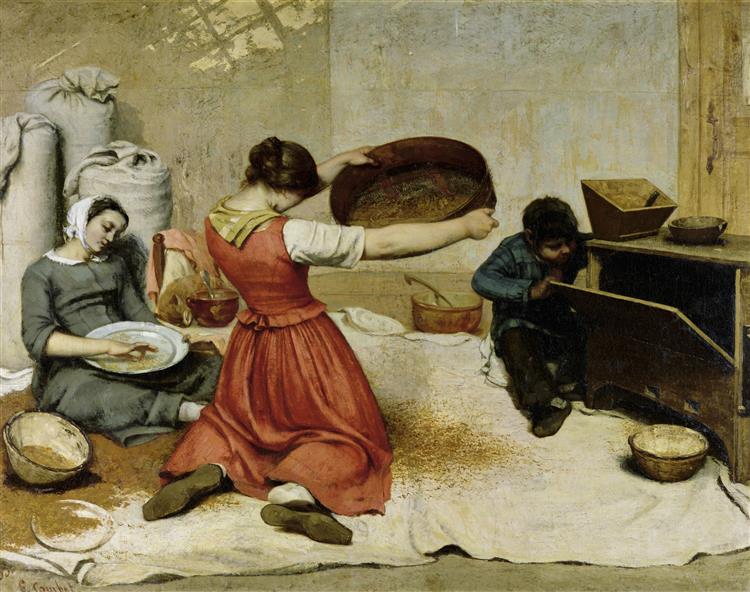
oil, canvas · 1855
Medium
oil, canvas
Period
Realism
Held at
Musée des Beaux-Arts de Nantes, Nantes, France