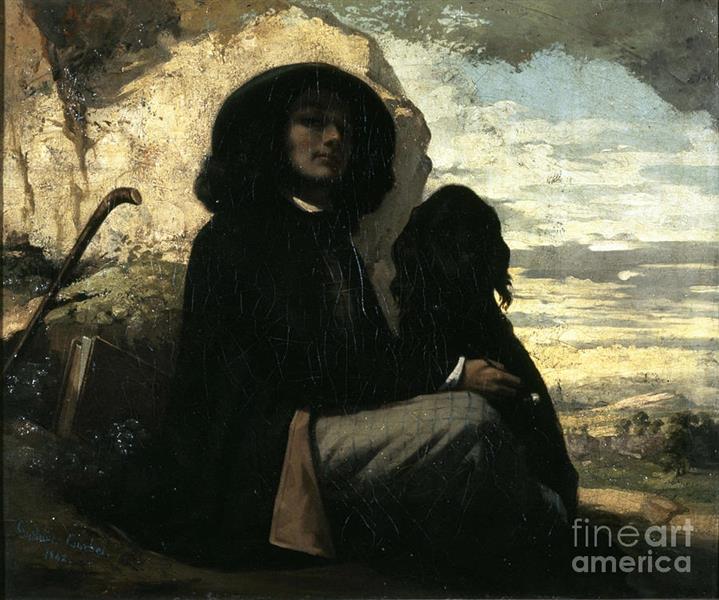
Self-Portrait with a Black Dog
Petit Palais, Paris, France
Gustave Courbet, 1841
The very presence of Gustave Courbet himself, gazing out from an oil-on-canvas surface, immediately arrests attention. This work, a self-portrait from 1842 and retouched in 1844, holds a central place in the Petit Palais in Paris. Courbet, a French artist associated with the Romanticism movement, chose to present himself not alone, but with a black dog. The contrast between the figure of the artist and the singular, specific color of his companion, black, suggests a deliberate choice in tone and perhaps mood within the composition. The medium itself, oil on canvas, implies a tangible quality, a certain weight and texture to the painted surface that binds these two subjects together. The act of a self-portrait offers an intimate, perhaps even introspective, view of the artist. But the silent presence of the black dog introduces an element of quiet companionship or perhaps even symbolic weight. One is left to consider the unspoken dialogue captured on that canvas, a relationship frozen in time that speaks to more than just a fleeting moment.
No thoughts yet. Be the first to share one.
TagsRomanticismoilcanvasself-portrait
3.50 (1 rating)
oil, canvas · 1841
Medium
oil, canvas
Period
Romanticism
Held at
Petit Palais, Paris, France