The Stages of Life
Museum der Bildenden Kunste, Leipzig, Germany
David Friedrich Caspar, 1835
Imagining "The Stages of Life," the 1835 work by David Friedrich Caspar, immediately plunges one into the deep philosophical currents of the Romanticism movement. Without direct visual information on this particular piece, we are left to contemplate how an artist of this era, working in oil on canvas, might have approached such a grand, universal theme. Romantic artists often imbued their works with deep emotional resonance, frequently through dramatic landscapes or symbolic figures, using light and shadow to evoke mood and a sense of the sublime. For a concept as vast as life's stages, Caspar might have chosen to depict a sweeping allegorical scene, perhaps with figures representing youth, maturity, and old age set against a significant natural backdrop. Or perhaps it is a more intimate portrayal, focusing on personal moments of transition. The medium itself, oil on canvas, allows for rich textures and atmospheric effects, capable of conveying both the vibrancy of beginnings and the somber reflections of endings. The absence of specific visual details shifts our engagement to the sheer concept, prompting us to project our own understanding of life's journey onto this intriguing, conceptually rich work. How did Caspar visually articulate the passage of time and human experience within a single frame, or did he present a sequence? The possibilities inherent in the title alone offer much to consider.
No thoughts yet. Be the first to share one.
TagsRomanticismoilcanvasallegorical painting
2.00 (1 rating)
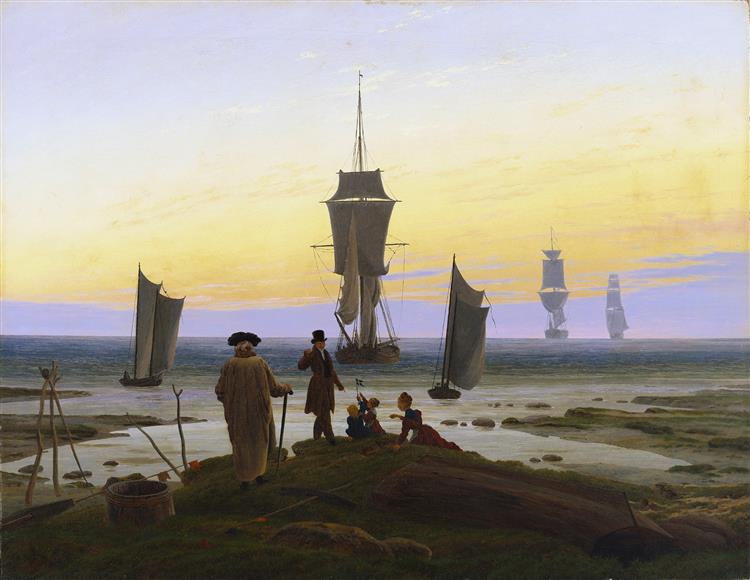
oil, canvas · 1835
Medium
oil, canvas
Period
Romanticism
Held at
Museum der Bildenden Kunste, Leipzig, Germany

.jpg)