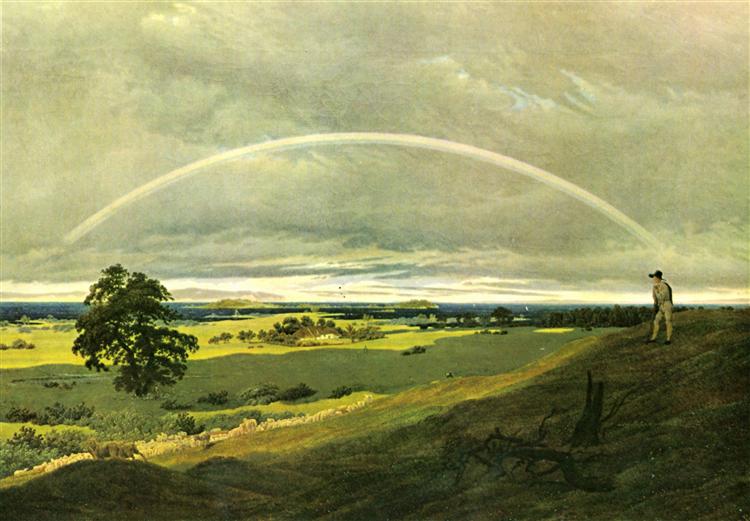
Landscape with rainbow
David Friedrich Caspar, 1810
Envisioning a "Landscape with rainbow" by David Friedrich Caspar, created in oil around 1810, immediately evokes the deep emotional resonance of Romanticism. The very title suggests a sky transformed, vibrant hues arcing dramatically across a vast vista, perhaps following a recent storm. One would anticipate rich, atmospheric effects achievable only with oil, depicting subtle transitions of light and shadow over rugged, expansive terrain. The painting likely positions the viewer, or small, solitary figures, amidst an overwhelming natural grandeur, a signature motif of the Romantic era, emphasizing humanity's contemplative relationship with the sublime. While concrete visual specifics of this particular 1810 work remain elusive in available records—and the artist's name, David Friedrich Caspar, is intriguingly close to Caspar David Friedrich, a prominent figure in Romantic oil painting—the concept alone speaks volumes. It’s a moment of profound awe, where the transient beauty of a rainbow might bridge the earthly and the transcendent. What unspoken longings would such an ethereal scene stir in someone gazing upon it?
No thoughts yet. Be the first to share one.
TagsRomanticismoillandscape
1.50 (1 rating)
oil · 1810
Medium
oil
Period
Romanticism
.jpg)