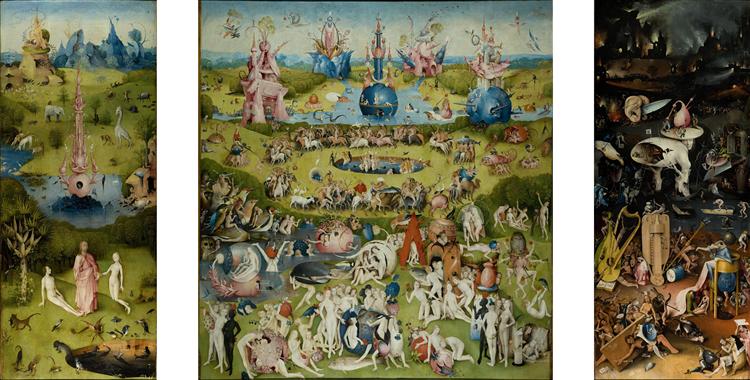
The Garden of Earthly Delights
Museo del Prado, Madrid, Spain
Hieronymus Bosch, 1515
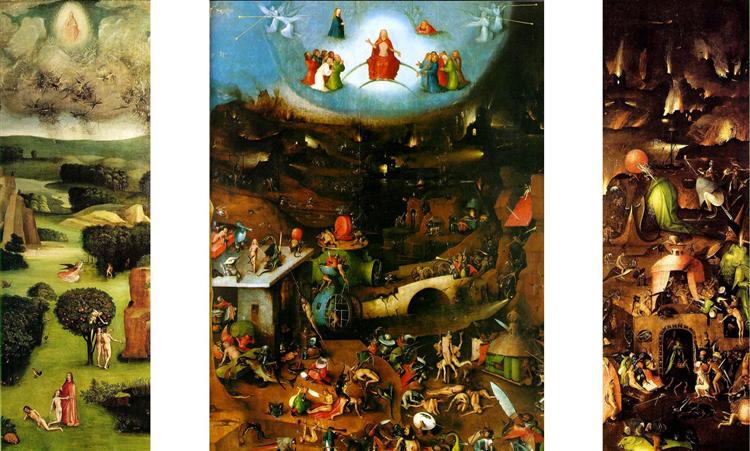
Hieronymus Bosch's "The Garden of Earthly Delights," created around 1515, is widely recognized as his most ambitious and famous creation. Executed in oil on panel, this triptych showcases Bosch’s unique artistic style through its incredibly vivid imagery and deep symbolic meaning, characteristic of the Northern Renaissance movement. The artwork invites viewers into a fantastical world, particularly in its central panel, which teems with nudes engaged in sexual activities, alongside oversized fruits and other provocative elements. While some art lovers interpret this scene as a depiction of paradise lost, many scholars and critics view it as a powerful moral warning about the perils of temptation, particularly lust—one of the seven deadly sins. The third panel starkly illustrates the consequences, portraying a vision of hell. Despite vast amounts of conjecture and scrutiny over the centuries, the enduring power of this work lies in its complex visual narrative and its profound, albeit debated, commentary on human morality.
N
Niharika KhannaSep 2024
Honestly mind-bending, and to think this was painted in the 1500s - it looks so modern in some ways, so reflective of society today. It's weird to think that people over 500 years ago lived life in a similar vein as us.
TagsNorthern Renaissanceoilpanelreligious painting
5.00 (4 ratings)
oil, panel · 1515
Medium
oil, panel
Period
Northern Renaissance
Held at
Museo del Prado, Madrid, Spain