The Card Players
Paul Cézanne, 1892
Paul Cézanne, a key figure in Post-Impressionism, created a captivating series of five oil paintings focused on card players in the early 1890s, with this specific artwork dated around 1892. Executed in oil on canvas, these pieces represent his unique contribution to genre painting, celebrating scenes from everyday life. Unlike the dramatic narratives often found in 17th-century Dutch and French predecessors, Cézanne's compositions offer a quieter contemplation. His figures, often local farmers, appear subdued, passive, or deeply immersed in their game, frequently smoking pipes. Facial expressions are limited, painted with just a few strokes to suggest shadowed or downcast eyes. Recent technical examinations suggest that Cézanne might have evolved his compositions from simpler two-figure arrangements to more complex versions, like those with four or five figures. Art historians suggest he treated these scenes much like his still life paintings, animating the surface with sequences of color contrasts, shifting between light and dark, warm and cool hues. This distinctive approach lends a monumental quality to the everyday activity, inviting viewers to appreciate the quiet dignity and focused concentration of the players.
No thoughts yet. Be the first to share one.
TagsPost-Impressionismoilcanvasgenre painting
4.50 (1 rating)
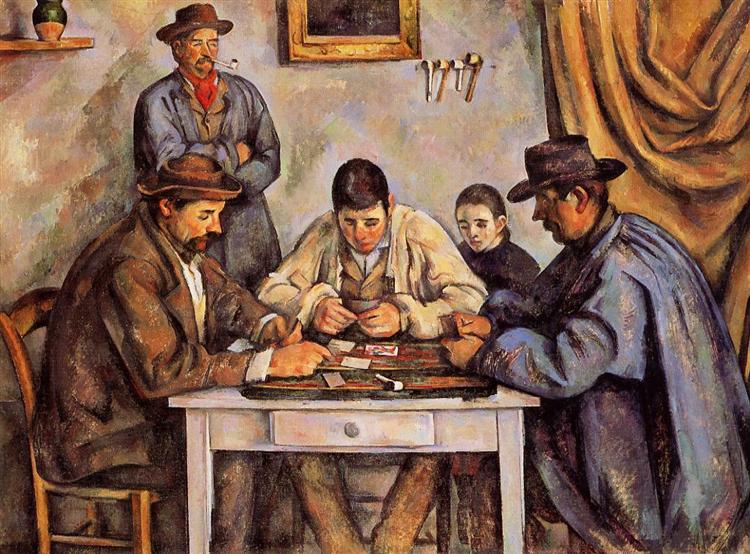
oil, canvas · 1892
Medium
oil, canvas
Period
Post-Impressionism