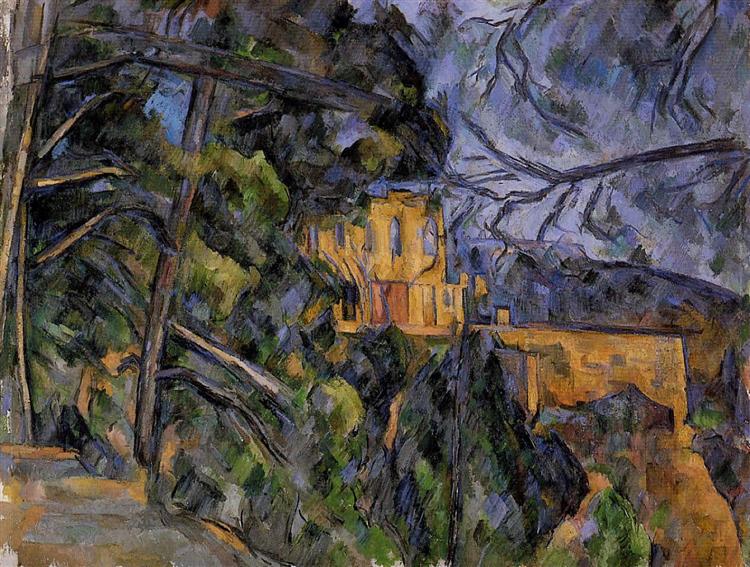
Chateau Noir
Paul Cézanne, 1904
The eerie structure of the Château Noir emerges, seemingly in ruins, half-hidden behind a dense screen of pines that almost completely obscure the sky. Cézanne's palette here is incredibly saturated, with deep dark greens, blues, and ochers that make the entire scene feel powerfully somber and enclosed. This particular view captures the house, whose namethe "black manor"might even hint at a former exterior color, in its decrepit isolation, inspiring some of his most foreboding images around 1904. The way the trees and rocks, like those of Bibémus, press in on the space creates a suffocating tension. These compositions from the Château Noir and Bibémus quarry are some of his most emotionally profound, indicating a palpable melancholy that marks his final decade, perhaps influenced by his struggles with diabetes and mortality. It makes you wonder if the decaying structure mirrors an inner state.
No thoughts yet. Be the first to share one.
TagsPost-Impressionismoilcanvaslandscape
4.50 (1 rating)
oil, canvas · 1904
Medium
oil, canvas
Period
Post-Impressionism