The Ambassadors
National Gallery, London, UK
Hans Holbein the Younger, 1533
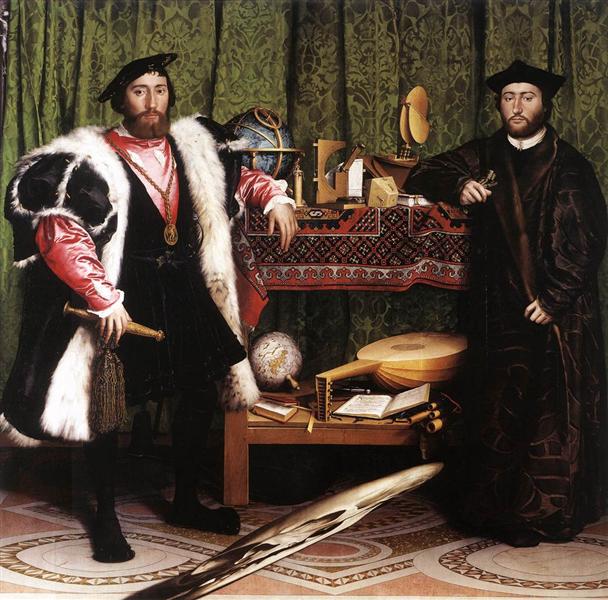
The painting presents two prominent figures with striking clarity: Jean de Dinteville, the French ambassador, positioned distinctly on the left, and Georges de Selve, a Catholic bishop. Holbein the Younger completed this oil on panel work in 1533, a painting also known by the very names of its subjects. The careful arrangement of these two men within the frame draws the eye, establishing their individual presences and perhaps hinting at their shared context. This particular year, 1533, resonates deeply, as it marks the birth of Elizabeth I, placing the artwork firmly within the vibrant Tudor period. There's a compelling speculation by Franny Moyle that Anne Boleyn might have specifically commissioned this piece as a gift for de Dinteville. This raises an intriguing possibility, suggesting that the visual representation of these two influential figures
—the ambassador anchoring the left side, the bishop standing beside him
—could carry a diplomatic message or a nuanced political intent. The visual dynamic between the ambassador and the bishop, and the potential weight of its commission, compels a deeper look into the layered narratives a single image can hold.
No thoughts yet. Be the first to share one.
TagsNorthern Renaissanceoilpanelportrait
5.00 (1 rating)
oil, panel · 1533
Medium
oil, panel
Period
Northern Renaissance
Held at
National Gallery, London, UK