Self-portrait
Palazzo Brera, Milan, Italy
Umberto Boccioni, 1908
Umberto Boccioni's 1908 Self-portrait, created in his Milan studio on Via Adige, presents a fascinating early moment in the artist's trajectory. This oil on canvas is significant not just as a self-depiction, but for its pioneering exploration of the Milanese periphery landscape. It places Boccioni within the emerging industrial edge of the city, a visual motif he frequently revisited before his revolutionary Futurist period, much like in his related sketch, The City Rising. We see an artist consciously observing and integrating his urban surroundings into his own image, suggesting a direct engagement with the developing, perhaps raw, landscape outside his studio window. Boccioni, a key figure in shaping the Futurism movement, later became renowned for his dynamic forms and the deconstruction of solid mass. The tension here lies in observing this earlier work, where the artist appears to be grounding himself in a tangible, if expanding, physical world, before moving towards the abstract energies of motion. It makes one consider how these foundational studies of the real, industrializing periphery might have germinated the seeds for his later, more abstract visions of urban dynamism and the collapse of traditional forms. The work’s journey continued when it was donated to Brera in 1951 by Boccioni’s friend and collector, Vico Baer, preserving this insightful look into the genesis of a pivotal artist's ideas.
No thoughts yet. Be the first to share one.
TagsImpressionismDivisionismoilcanvasself-portrait
5.00 (1 rating)
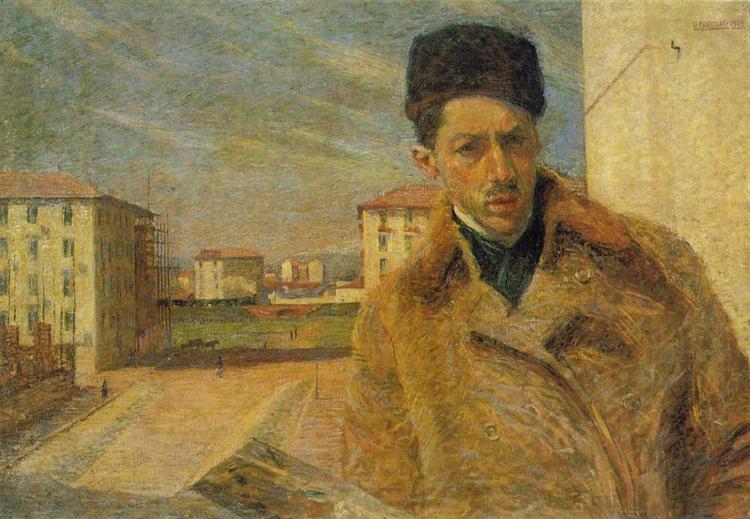
oil, canvas · 1908
Medium
oil, canvas
Period
Impressionism · Divisionism
Held at
Palazzo Brera, Milan, Italy
.jpg!Large.jpg)