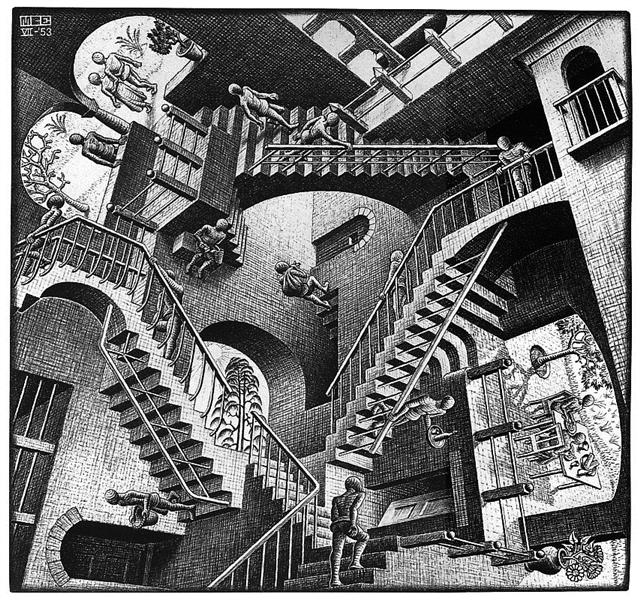
Relativity lattice
M.C. Escher, 1953
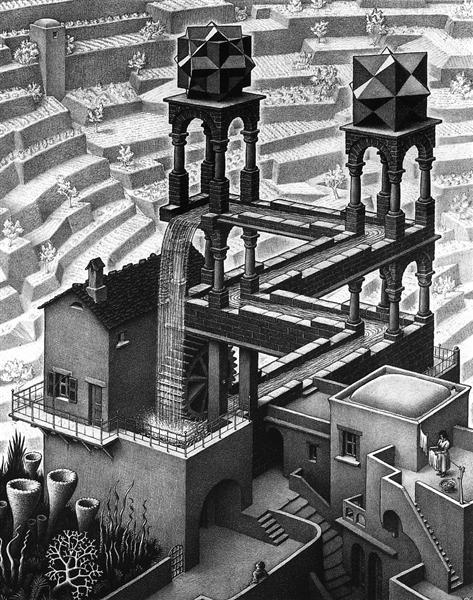
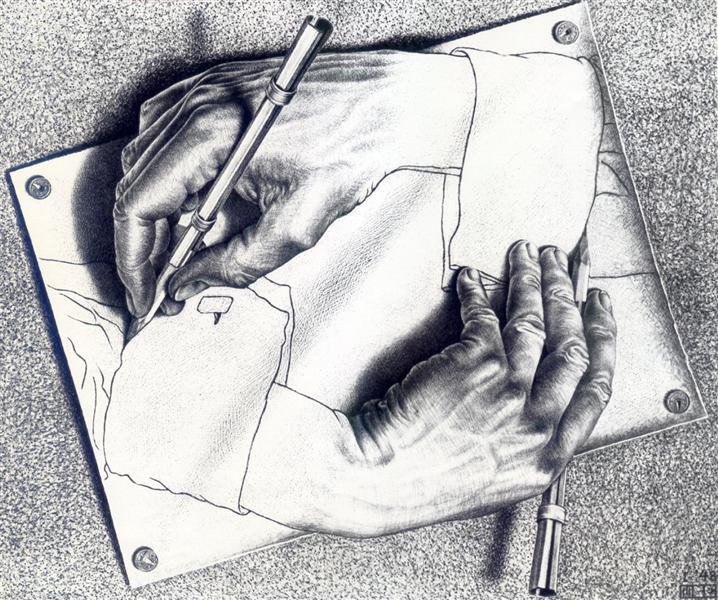
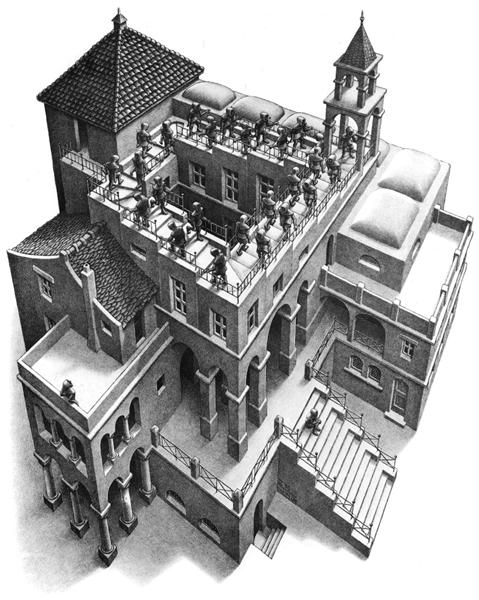
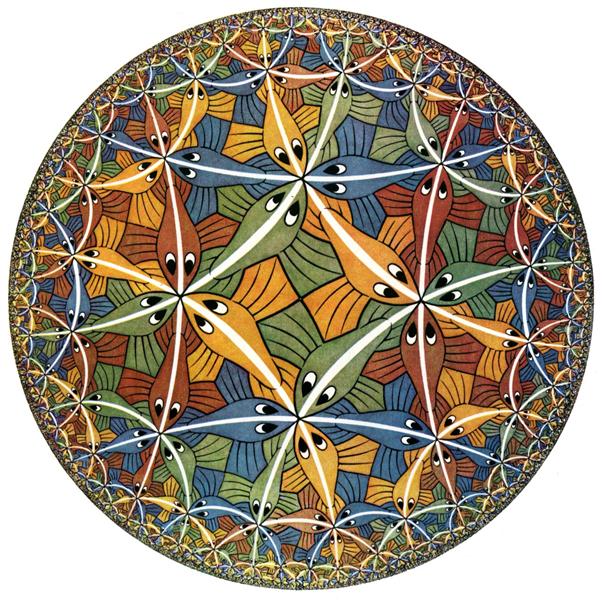
The intricate framework of "Relativity lattice" immediately draws you into a world where spatial rules seem to bend. Imagine a complex grid, a delicate network of lines and intersections, not fixed, but subtly shifting, challenging how we perceive structure. It’s from M.C. Escher, an artist often associated with Surrealism, and it hints at his profound interest in the properties of space and relative positions, much like the mathematical field of geometry explores distances, shapes, and angles. Though the specific medium from 1953 remains unknown, one can almost feel the deliberate construction of its components, perhaps echoing the precise detail Escher applied in works like his color woodcut, "Möbius Strip II." This isn't just a pattern; it's a visual puzzle that makes one contemplate whether a single, objective reality truly exists or if all spatial understanding is, in fact, relative. The work leaves you wondering about the very foundations of perception, how a simple lattice can suggest infinite, confounding possibilities within its finite bounds.
No thoughts yet. Be the first to share one.
TagsSurrealismcapriccio
3.75 (2 ratings)
1953
Period
Surrealism