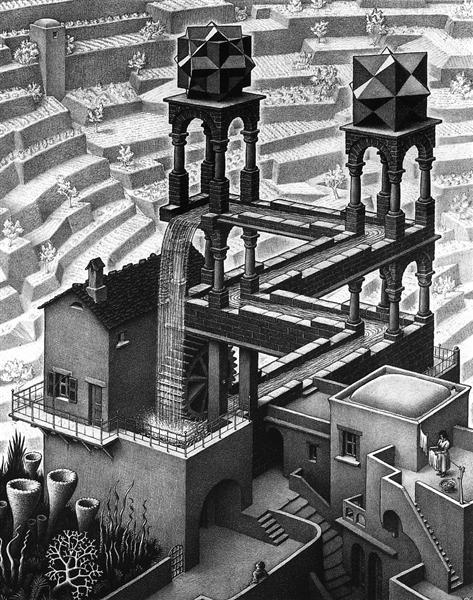
Waterfall
M.C. Escher, 1961
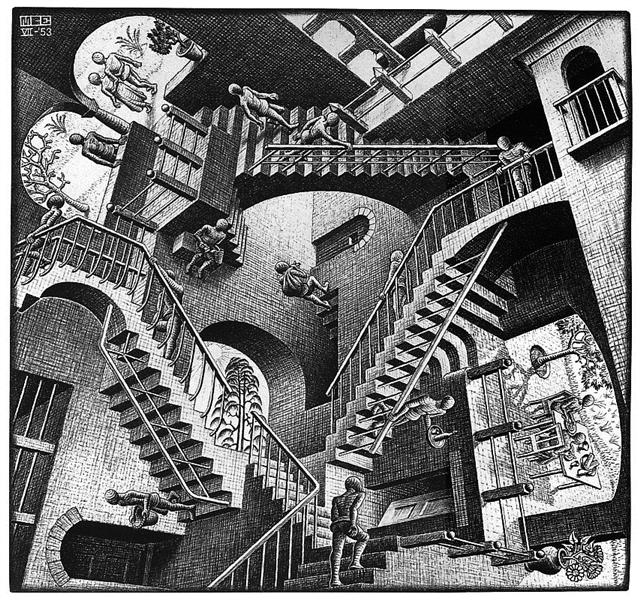
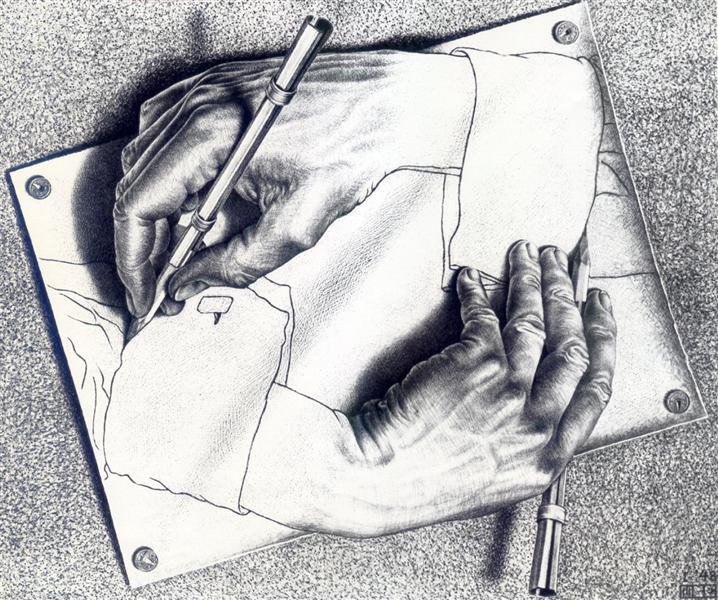
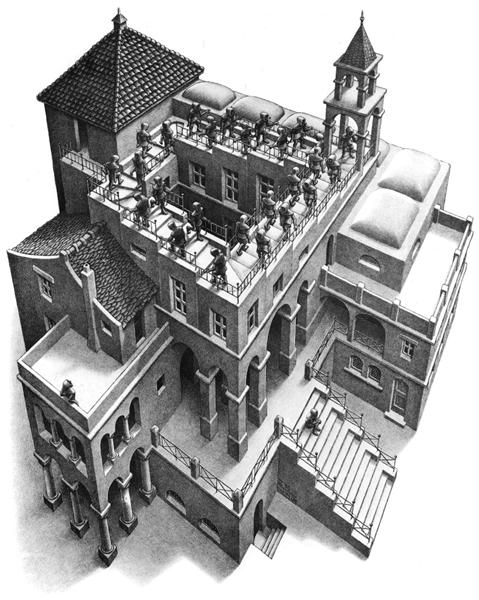
M.C. Escher's "Waterfall," created in 1961, stands as an example of the Surrealism movement. Escher, an artist renowned for his captivating exploration of impossible realities and visual paradoxes, consistently challenged viewers to question their perceptions. Although the specific medium used for this artwork is not detailed in available records, it's highly probable that "Waterfall," characteristic of Surrealist art, would present a scene that defies conventional logic and natural laws. Imagine water flowing uphill, or architectural structures that twist and connect in visually impossible loops, creating a dreamlike yet precise composition. Art from this period often seeks to tap into the subconscious mind, crafting landscapes or scenarios that are both deeply intriguing and subtly disorienting. Escher's unique ability to render such fantastical concepts with meticulous detail would make this a compelling piece, inviting us into a world where the boundaries of possibility are delightfully blurred, offering a profound journey into the imagination.
No thoughts yet. Be the first to share one.
TagsSurrealismcapriccio
5.00 (2 ratings)
1961
Period
Surrealism