Portrait of Maria Teresa de Vallabriga on horseback
Uffizi Gallery, Florence, Italy
Francisco Goya, 1783
The very notion of capturing Maria Teresa de Vallabriga on horseback in oil on canvas, by Francisco Goya in 1783, immediately suggests a commanding presence. A portrait like this, rendered with the fluidity of oil paint, positions its subject dynamically within the frame. It's a statement, placing a figure typically associated with indoor settings or more formal, static poses, astride a horse. As an artist, Goya was a Spanish leader in the artistic movement of Romanticism. His extensive output, including numerous paintings, prints, and drawings, indicates a profound engagement with his craft. This particular work, dating to 1783, highlights an early period in the career of an artist who would later be recognized for his influential style. The choice of an equestrian portrait itself is noteworthy, conveying status and perhaps an underlying tension inherent in the Romantic approach to subject matter. What subtle narratives might Goya have woven into the texture of the canvas, beyond the mere representation of a noblewoman and her mount?
No thoughts yet. Be the first to share one.
TagsRomanticismoilcanvasportrait
4.00 (1 rating)
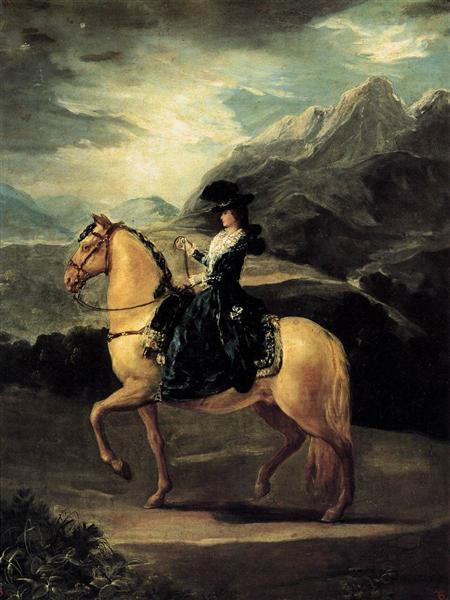
oil, canvas · 1783
Medium
oil, canvas
Period
Romanticism
Held at
Uffizi Gallery, Florence, Italy