The Third of May 1808 (Execution of the Defenders of Madrid)
Museo del Prado, Madrid, Spain
Francisco Goya, 1814
Goya's powerful oil on canvas from 1814, a key work of the Romanticism movement, plunges viewers into the brutal reality of war. This gripping artwork was commissioned by Spain's provisional government, reportedly at Goya's suggestion, to memorialize the 1808 invasion by Napoleon's forces. It shattered conventions by openly illustrating the horrors of conflict, a stark departure from earlier artistic traditions. The scene rivets attention on a lone man, bathed in stark white light, his arms flung wide in a gesture of defiant despair, confronting a French firing squad. Around him, slain companions lie tragically on the ground, emphasizing the devastating toll. This profound piece was considered groundbreaking and revolutionary at its time of creation, establishing itself as one of the earliest examples of modern art. Its powerful imagery and style have left a lasting legacy, directly influencing renowned artists like Edouard Manet and Pablo Picasso.
No thoughts yet. Be the first to share one.
TagsRomanticismoilcanvashistory painting
4.83 (3 ratings)
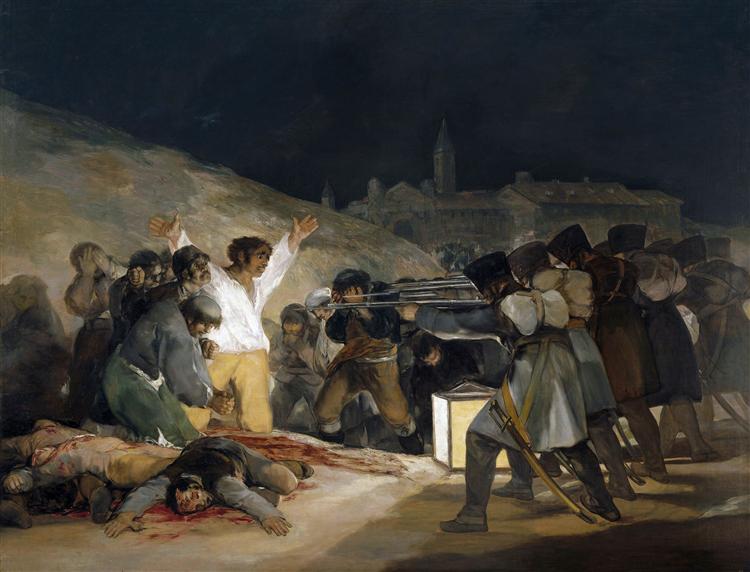
oil, canvas · 1814
Medium
oil, canvas
Period
Romanticism
Held at
Museo del Prado, Madrid, Spain