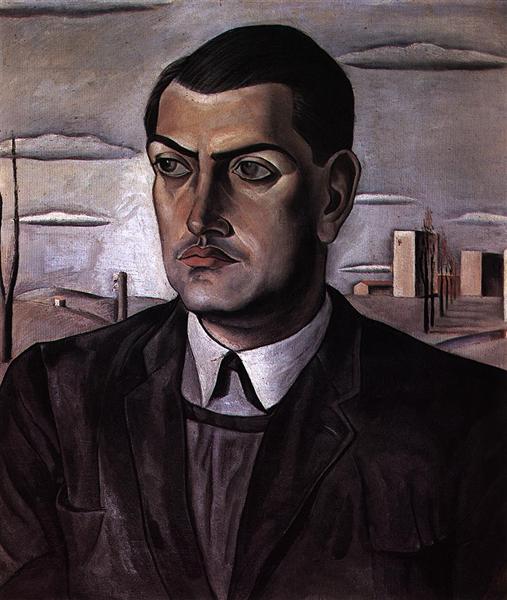
Portrait of Luis Bunuel
Salvador Dali, 1924
It’s intriguing to consider Salvador Dali’s Portrait of Luis Bunuel, painted in 1924, a piece rendered in oil on canvas that firmly places him within the Post-Impressionism movement. This early work offers a crucial, albeit visually unconfirmed, glimpse into Dali's artistic formation, long before the dreamscapes and melted clocks became his undeniable signature. The very notion of Dali tackling a traditional portrait using oil on canvas in this particular period sparks immediate curiosity about his evolving technique and interpretation. Did he lean into the bold, expressive brushwork characteristic of Post-Impressionism, or were there already subtle hints of the meticulous precision that would later define his iconic style? Without specific visual details from the available sources, one can only imagine the chosen color palette, the quality of light falling across Bunuel’s features, or the specific compositional choices Dali made to convey his subject. This portrait, therefore, exists as an important, if visually elusive, marker in Dali's early trajectory, hinting at the foundational artistic currents that shaped his profoundly unique vision. What nascent elements might have been present, foreshadowing his truly distinct future path?
No thoughts yet. Be the first to share one.
TagsPost-Impressionismoilcanvasportrait
3.50 (1 rating)
oil, canvas · 1924
Medium
oil, canvas
Period
Post-Impressionism