Paul Gauguin's Armchair
Van Gogh Museum, Amsterdam, Netherlands
Vincent van Gogh, 1888
An armchair, once belonging to Paul Gauguin, painted by Vincent van Gogh in 1888, immediately suggests a story beyond the canvas itself. This oil on canvas, firmly placed within the Post-Impressionist movement, compels consideration of the intricate connections among artists of that vibrant era. While the available sources offer no specific visual description of Van Gogh's particular rendering – no precise colors, compositional details, or textural insights into his brushwork – we can still appreciate its context. Gauguin's own Post-Impressionist work, such as "Mahana no atua (Day of the God)" from 1894, created with oil on linen canvas, transports viewers to a tropical paradise where a deity watches over symbolic figures, all within abstract zones of acidic color. This example from Gauguin reveals the varied creative paths within the Post-Impressionist landscape, a contrast perhaps to the intimate reflection an armchair might convey. What dialogue, silent or otherwise, did Van Gogh intend with this seemingly humble subject, honoring a fellow artist whose visual world was so distinct?
No thoughts yet. Be the first to share one.
TagsPost-Impressionismoilcanvasstill life
4.50 (1 rating)
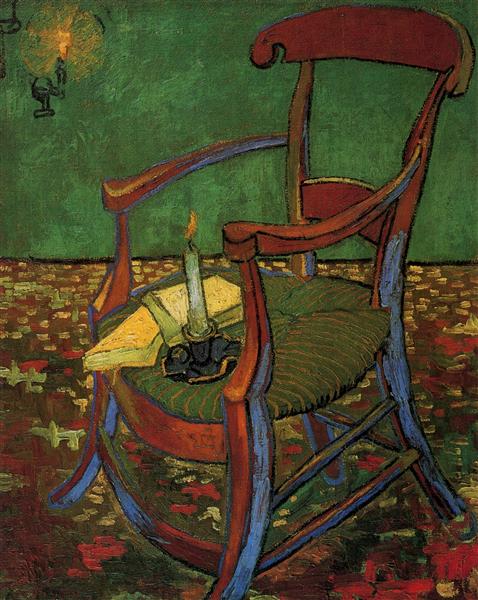
oil, canvas · 1888
Medium
oil, canvas
Period
Post-Impressionism
Held at
Van Gogh Museum, Amsterdam, Netherlands