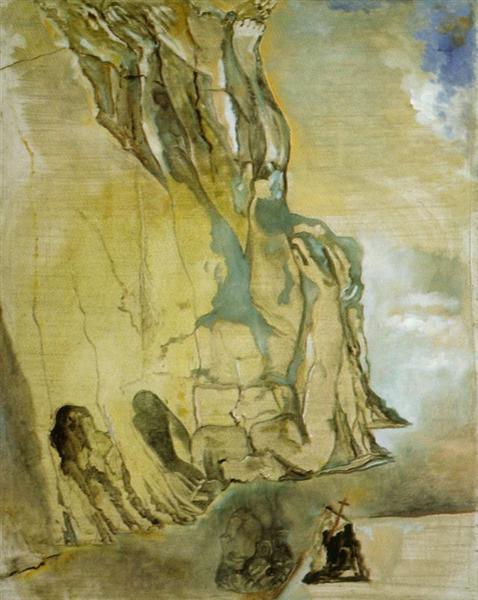
Landscape with Hidden Image of Michelangelo's 'David'
Salvador Dali, 1982
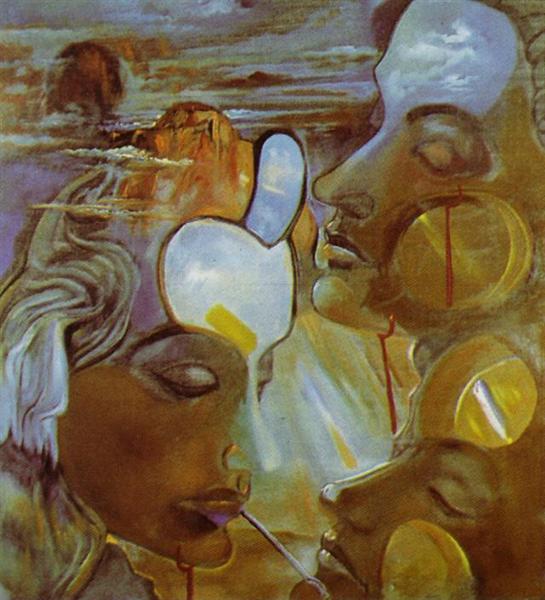
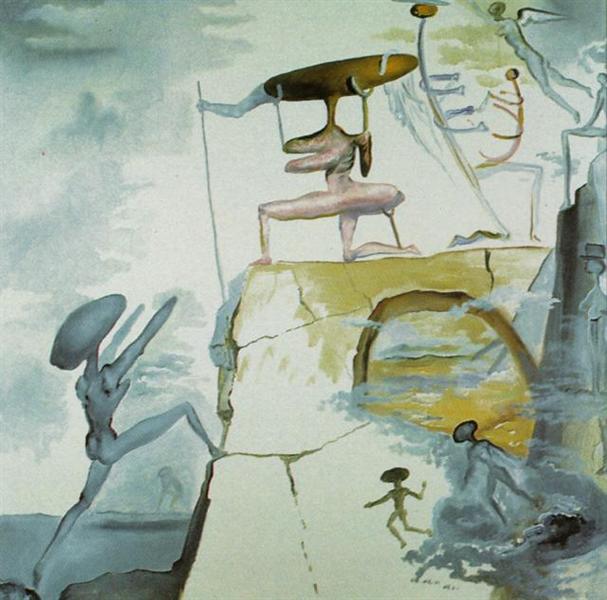
To think of Salvador Dali, a pivotal figure in Symbolism, creating a "Landscape with Hidden Image of Michelangelo's 'David'" in 1982 is immediately intriguing. The title itself sparks curiosity about how such a monumental classical figure could be incorporated surreptitiously into a natural scene. Without a known medium for this particular artwork, one can only imagine the techniques Dali might have employed to conceal or reveal David within the landscape. Perhaps it
Dali’s approach, leaving the viewer to search for the unseen.s a play of light and shadow, or a masterful illusion where shapes in the terrain subtly coalesce into the form of the legendary sculpture. We know that Michelangelo's iconic "David" has been reinterpreted, such as in Jack A. Jaffe's c. 1960s gelatin silver print, measuring 15.9
23.5 cm. This photographic lens on David suggests the many ways the classical form can be perceived or represented, making Dali’s conceptual move even more fascinating. The very notion of an unseen David lurking within a pastoral vista creates a lingering tension, inviting a viewer to actively engage in the visual search, pondering what elements might betray its presence.
No thoughts yet. Be the first to share one.
TagsSymbolismlandscape
4.50 (1 rating)
1982
Period
Symbolism