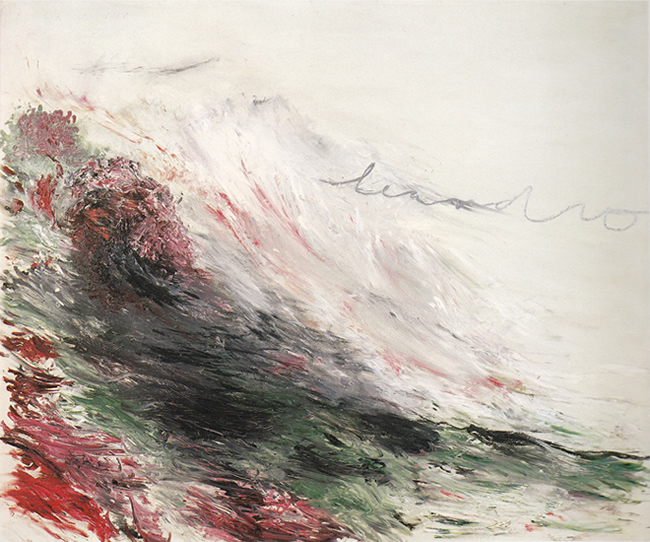
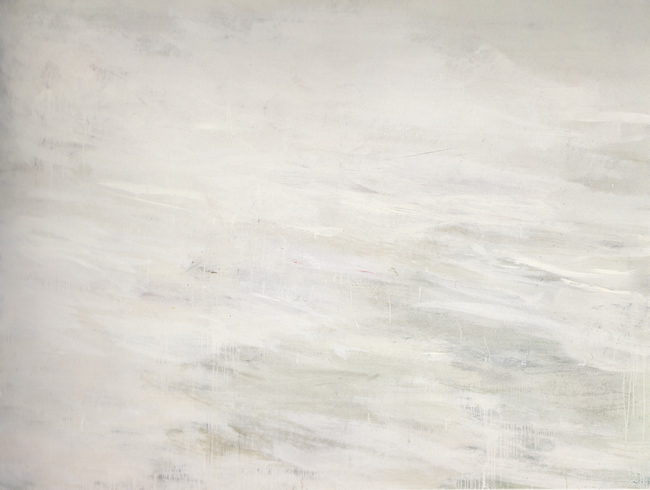
Hero and Leandro (A Painting in Four Parts) Part III
Cy Twombly, 1984
The very designation of "Hero and Leandro (A Painting in Four Parts) Part III" immediately sets up a powerful narrative expectation, yet we're talking about a work from Abstract Expressionism. This collision of classical myth and a movement often defined by raw gesture and emotional mark-making, rather than clear figuration, is truly fascinating. How does Part III of such a poignant saga look through Cy Twombly's lens, especially when the very medium itself remains unknown? The title alone suggests a segment of a larger, perhaps fragmented, story, leaving the viewer to imagine how the ancient tragedy or passionate despair of Hero and Leandro might translate into the artist's distinctive, often calligraphic language of lines, scribbles, and washes. This ambiguity of both form and material, created in 1984, pushes us to consider what specific visual elements could possibly convey such a dramatic interlude without explicit, traditional representation. One wonders if the unknown material adds another layer to this mystery, forcing a deeper engagement with the inferred visual energy. It's an intriguing paradox: a named narrative steeped in history, rendered in an unnamed material, begging for an imagined visual vocabulary that reconciles its ancient source with modern abstraction.
No thoughts yet. Be the first to share one.
TagsAbstract Expressionismabstract
3.00 (1 rating)
1984
Period
Abstract Expressionism