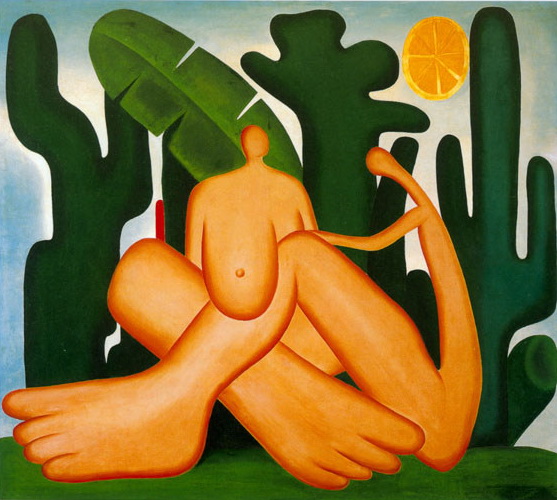
Abaporu
do Amaral Tarsila, 1928
The designation of Naïve Art (Primitivism) for Tarsila do Amaral's 1928 oil work, "Abaporu," immediately signals a break from conventional artistic traditions. This classification suggests a deliberate embrace of simplified forms and a direct, unfiltered aesthetic, implying a departure from academic polish towards a more instinctive visual language. As an oil painting, the piece would naturally possess a certain material depth and luminosity in its surface, allowing for varied textures and rich color possibilities, even if the specific application and palette remain unrevealed. The Primitivist aspect points to an engagement with foundational, often non-Western, artistic expressions, typically involving symbolic rather than strictly realistic representation. One might anticipate a composition defined by essential shapes and a strong, perhaps even bold, overall structure. Without specific visual details, the true character of do Amaral’s unique interpretation within these movements remains a compelling, open question, prompting further contemplation of how she translated these broad stylistic principles into a singular artistic statement.
M
Miguel?Oct 2024
A forma como essa pintura segue sendo discutida até hoje por iniciativa do público consumidor de arte mais insuportável da atualidade (otakus) já mostra o peso do trabalho da Tarsila.
TagsNaïve Art (Primitivism)oilnude painting (nu)
5.00 (1 rating)
.jpg!Large.jpg)
oil · 1928
Medium
oil
Period
Naïve Art (Primitivism)