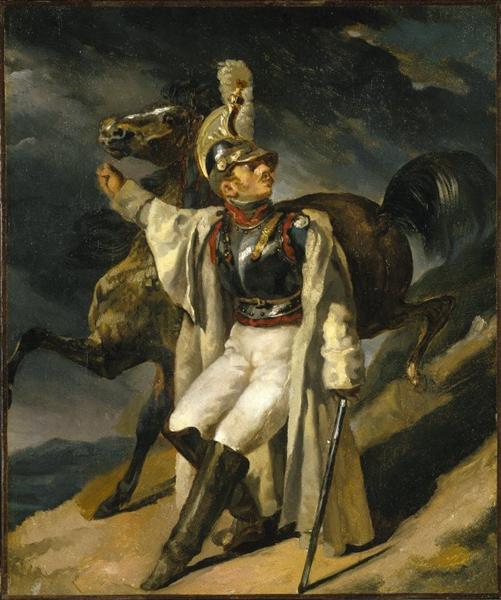
The Wounded Cuirassier
Louvre, Paris, France
Theodore Gericault, 1814
A lone soldier, slumping on his nervous horse, descends a slope, embodying a profound sense of exhaustion. This oil on canvas work by Théodore Géricault, presented at the Salon of 1814, depicts an anonymous cuirassier who, despite the artwork’s title, displays no visible physical wounds. Géricault intentionally moved away from the heroic battle scenes prevalent at the time, choosing instead to portray a figure on the losing side, subtly reflecting the aftermath of France’s disastrous military campaign in Russia. The subtle detail of absent injury suggests a deeper, psychological affliction; the title has often been interpreted to refer to the soldier’s injured pride rather than a bodily wound. This approach diverged sharply from Géricault's more triumphant 'Charging Chasseur,' deliberately eschewing glory for the quiet desolation of defeat. The feeling of a nation in defeat is palpable in the soldier's posture and the horse's anxious stance. The way the scene unfolds, focusing on this intimate moment of withdrawal, leaves one pondering the true weight of loss beyond the battlefield.
No thoughts yet. Be the first to share one.
TagsRealismoilcanvasbattle painting
5.00 (1 rating)
oil, canvas · 1814
Medium
oil, canvas
Period
Realism
Held at
Louvre, Paris, France