The Raft of the Medusa
Louvre, Paris, France
Theodore Gericault, 1819
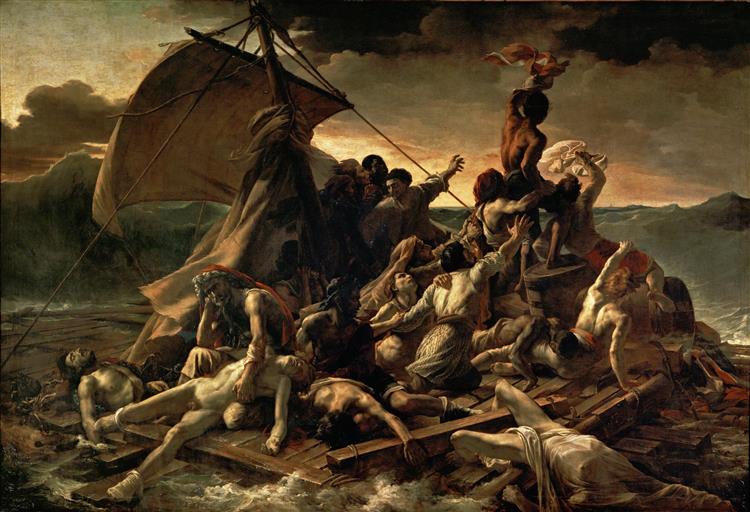
The raw human struggle within this immense oil on canvas work immediately confronts us. A gruesome mass of figures, some clearly dead, others desperately clinging to life, are tangled together on a crudely-made raft. An African figure, positioned atop a pile of men, frantically waves a cloth at a tiny, distant ship, while the raft's sail billows under a choppy ocean and stormy sky. Géricault's meticulous attention to detail is stark; he even sketched severed body parts to achieve such unsettling authenticity. Completed in 1819, this work dramatically interprets the harrowing 1816 Medusa shipwreck, an event where 147 passengers, abandoned by their incompetent captain, endured starvation, dehydration, and even cannibalism over 13 horrific days, with only fifteen surviving. The public reception at the 1819 Salon was intensely divided; critics either found its horror fascinating or dismissed it as a "pile of corpses," a far cry from the "ideal beauty" championed by classicists. The painting became an international scandal, a searing indictment of the French government's failings. It makes one question how a painter reconciles such a hideous reality with art's purpose, and whether its true role is to challenge our ideals.
No thoughts yet. Be the first to share one.
TagsRealismRomanticismoilcanvashistory painting
4.83 (3 ratings)
oil, canvas · 1819
Medium
oil, canvas
Period
Realism · Romanticism
Held at
Louvre, Paris, France