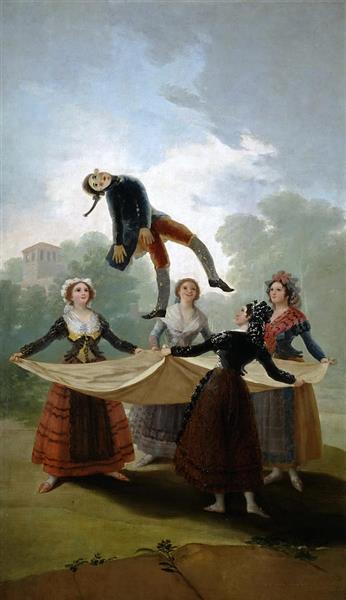
The Straw Manikin
Museo del Prado, Madrid, Spain
Francisco Goya, 1792
Imagine a constructed figure, perhaps light and almost whimsical, fashioned from straw
A this is the intriguing premise of Francisco Goya
1792 work, "The Straw Manikin." Executed in oil on canvas, this piece belongs to a significant series of paintings Goya produced as designs, known as tapestry cartoons, for the Royal Tapestry Factory of Santa Barbara. It's not just a painting; it's a blueprint intended for another medium, hinting at the lively, popular themes so characteristic of these designs, which often depicted bucolic or rural scenes. The very idea of a straw manikin suggests a playful or even ritualistic subject, perfectly aligning with the popular themes that adhered strictly to the tastes of patrons like King Charles III and princes Charles of Bourbon and Maria Luisa of Parma. The fact that Goya
s work was supervised by other artists at the factory adds a layer of collaborative, almost industrial, intent to this piece, despite its individual creation. This functional purpose, now largely overshadowed by its status as an artwork, makes you consider the tension between artistic vision and royal demands, a dynamic that must have shaped its final appearance. Many of these cartoons are now in the Museo del Prado.
No thoughts yet. Be the first to share one.
TagsRococooilcanvasgenre painting
3.75 (2 ratings)
oil, canvas · 1792
Medium
oil, canvas
Period
Rococo
Held at
Museo del Prado, Madrid, Spain