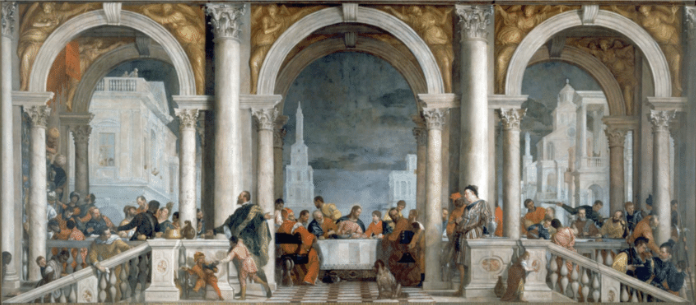
The Wedding Feast at Cana
Louvre, Paris, France
Paolo Veronese, 1563
The grandeur of a miraculous event unfolds across the expansive surface of Paolo Veronese’s "The Wedding Feast at Cana." Executed in 1563 using oil on canvas, the artwork is a large-format depiction of the biblical narrative where Jesus performs the transformation of water into red wine. This central act of divine power is contained within a composition known for its striking harmony, a stylistic ideal pursued in the Mannerist movement of the late Renaissance. Veronese’s approach here, reflecting the period from 1520 to 1600, echoes the pursuit of balanced arrangements seen in the works of artists like Leonardo, Raphael, and Michelangelo. The artwork's scale, combined with its Orientalism, hints at a world both opulent and sacred. One might ponder how such a profound, sudden miracle—the instantaneous appearance of rich red wine—could be rendered with such measured, almost theatrical, compositional precision. It leaves one considering the tension between the dramatic and the deliberate.
No thoughts yet. Be the first to share one.
TagsMannerism (Late Renaissance)Orientalismoilcanvasreligious painting
5.00 (1 rating)
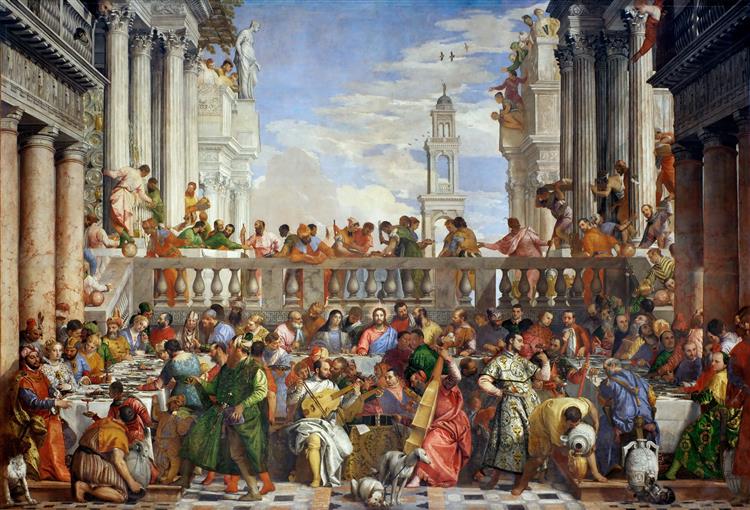
oil, canvas · 1563
Medium
oil, canvas
Period
Mannerism (Late Renaissance) · Orientalism
Held at
Louvre, Paris, France