The Finding of Moses
Private Collection
Lawrence Alma-Tadema, 1904
The Finding of Moses" evokes a dramatic moment, a discovery of profound historical and religious significance. This artwork from 1904, rendered in oil on canvas by Lawrence Alma-Tadema, takes its title from a well-known biblical narrative. As a Dutch painter who trained at the Royal Academy of Antwerp before making his home in London in 1870, Alma-Tadema frequently engaged with historical and classical subjects, fitting within the Romanticism movement of his time. This specific piece, through its very title, implies a composition likely populated with human figures and an evocative environment, setting the stage for the revelation of the infant Moses. The medium of oil on canvas speaks to a traditional approach, enabling a rich portrayal of depth and texture for such a pivotal story. One might consider how Alma-Tadema's dual background, Dutch origins followed by a career in the United Kingdom, shaped his artistic lens on this ancient tale, potentially merging a northern European perspective with classical themes. The specific visual details of Alma-Tadema's interpretation—the particular colors, the arrangement of figures, or the ambient light he chose—remain a point of imagination based solely on the title and medium, leaving us to ponder the precise emotional weight and visual grandeur he brought to this fabled discovery, a moment pregnant with destiny.
No thoughts yet. Be the first to share one.
TagsRomanticismoilcanvasreligious painting
4.50 (1 rating)
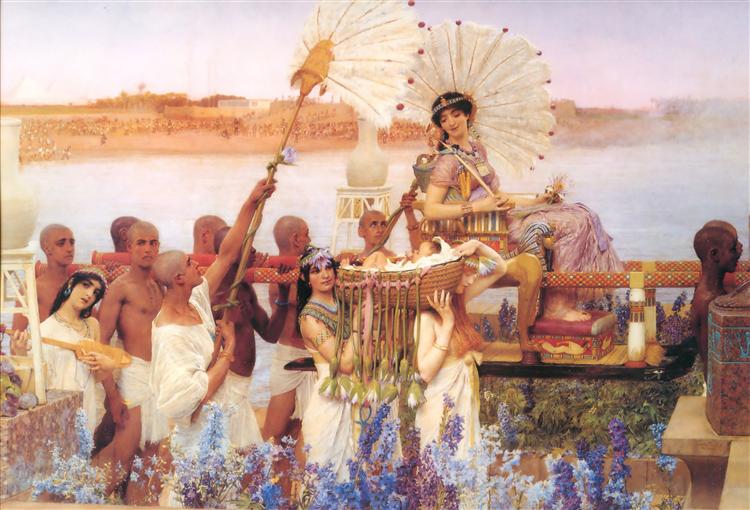
oil, canvas · 1904
Medium
oil, canvas
Period
Romanticism
Held at
Private Collection